
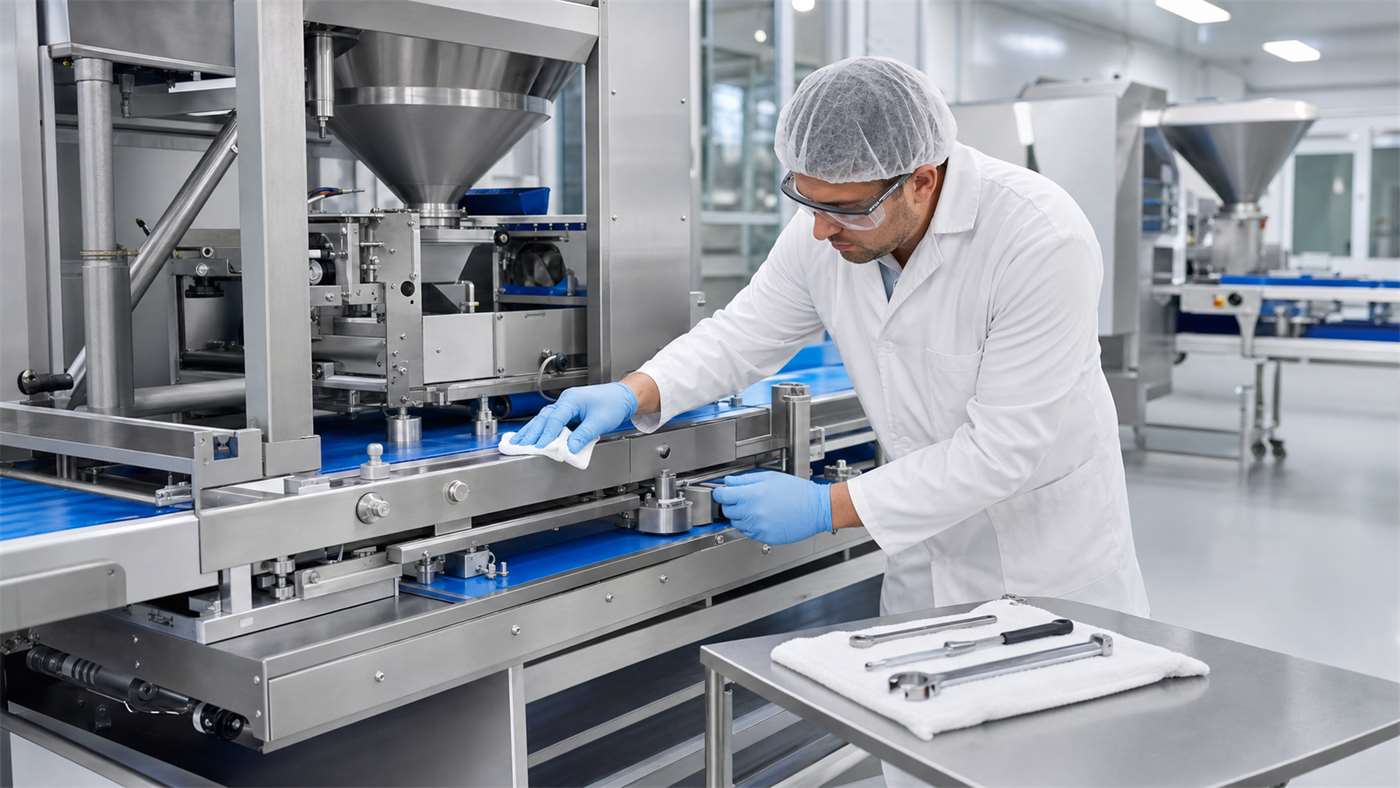
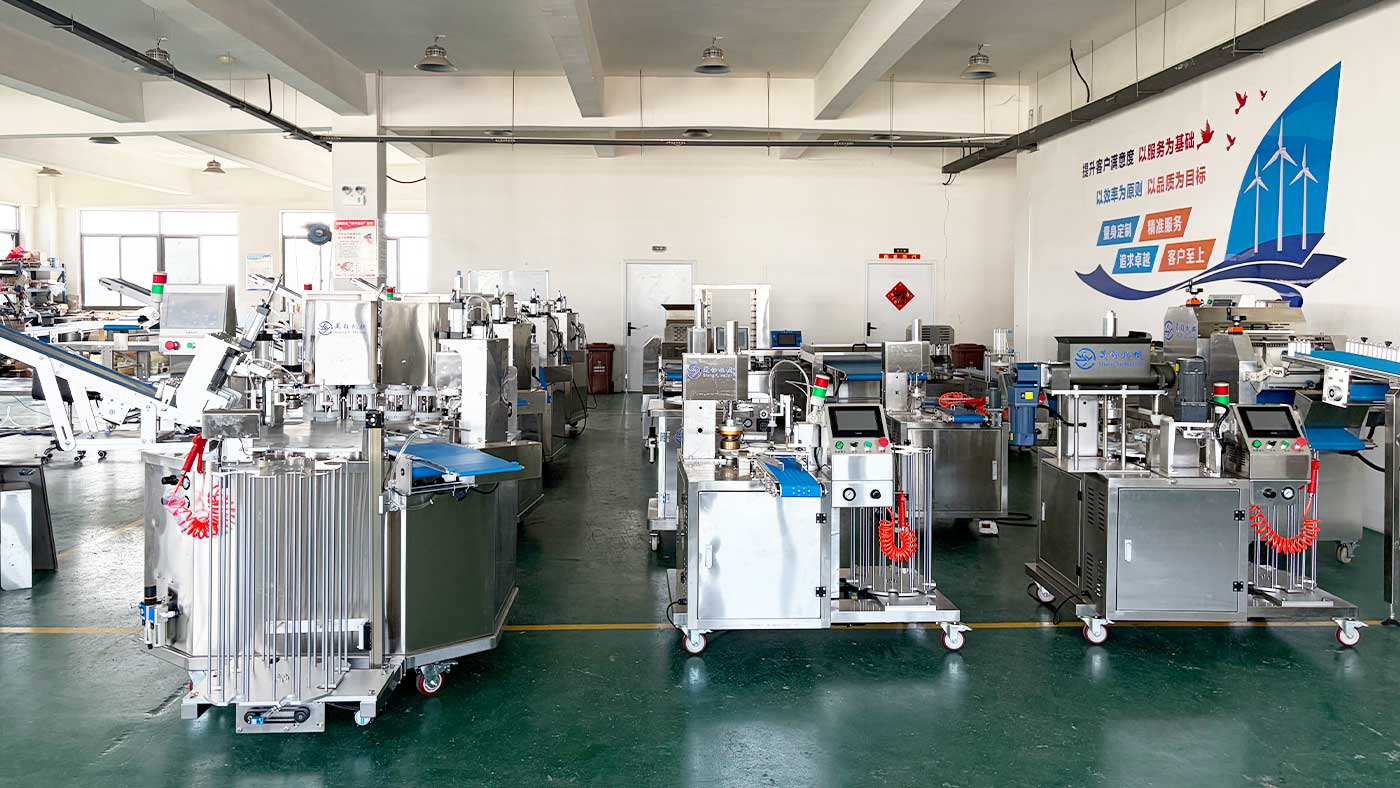
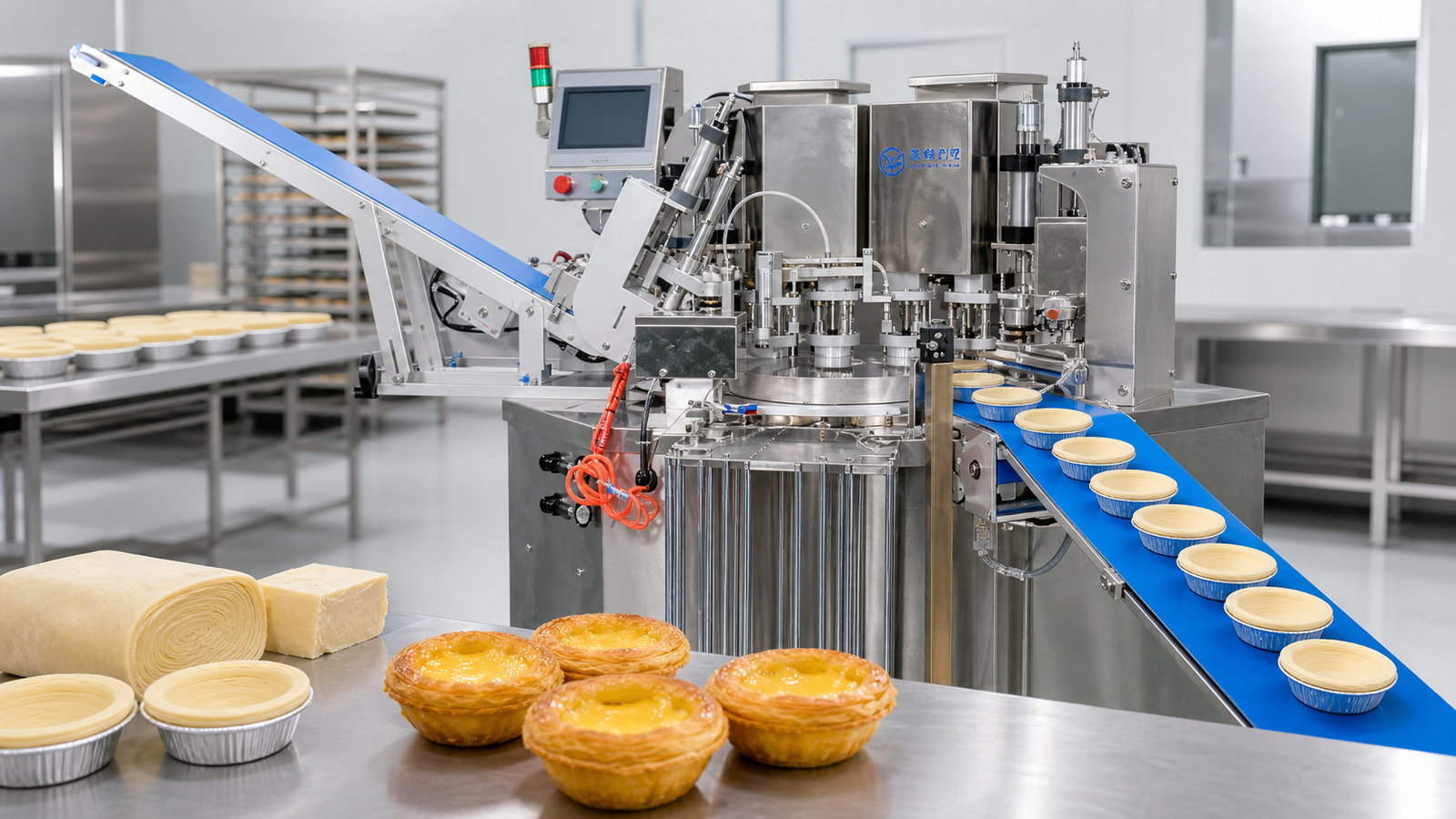
An efficient egg tart production line is more than a single forming machine. Dough processing, shell forming, filling, tray handling, baking, and cooling must work together at compatible speeds.
The right equipment configuration depends on the tart style, dough recipe, cup dimensions, target output, workshop space, and existing equipment. Before selecting a machine, manufacturers should first understand the complete production process.
Understand the Production Process
A typical egg tart production process may include:
- Dough preparation
- Dough sheeting or portioning
- Cup feeding
- Egg tart shell forming
- Liquid filling
- Tray arranging
- Baking
- Cooling and packaging
Not every factory needs to purchase a complete production line. If mixers, ovens, or packaging equipment are already available, new equipment should be selected according to the existing workflow and connection requirements.
Dough Processing Equipment
Dough condition directly affects the quality of the formed tart shell. Temperature, thickness, portion weight, and consistency should remain within a suitable range during production.
Depending on the recipe, the dough-processing stage may require:
- Dough sheeting equipment
- Dough cutting equipment
- Dough dividing equipment
- Dough feeding conveyors
The output format of the dough-processing equipment must match the feeding method of the egg tart forming machine. For laminated pastry dough, unsuitable pressure or handling may affect the visible layers of the finished product.
Testing equipment with the actual dough recipe is usually more reliable than selecting a machine based only on its maximum capacity.
Egg Tart Shell Forming Machine
The egg tart shell forming machine is the central equipment in the production line. It places or receives the dough portion and presses it into the required shape inside a foil cup or other container.
To configure the forming machine correctly, provide the supplier with:
- Egg tart style
- Cup material
- Top and bottom diameters
- Cup height
- Dough weight per shell
- Required shell thickness
- Target hourly output
Different tart dimensions normally require suitable molds and machine settings. If several product specifications will be produced, the mold-change method and required changeover time should also be confirmed.
The choice between an automatic and semi-automatic machine should consider production volume, available labor, workshop space, and product variety.
Filling and Tray Arranging Equipment
Where automatic liquid filling is required, the filling system should match the recipe, filling weight, cup spacing, and conveyor speed.
Important filling considerations include:
- Filling volume
- Liquid viscosity
- Filling temperature
- Number of filling heads
- Drip control
- Cleaning method
After forming or filling, the products must be transferred to trays or the next production stage. Automatic tray arranging can reduce repeated manual placement and create a more organized workflow.
The tray-arranging system should be configured according to the tray dimensions, number of products per row, row spacing, product orientation, and conveyor height.
Baking and Downstream Integration
The forming line must connect effectively with baking, cooling, and packaging operations.
Before confirming the production-line layout, check:
- Oven loading method
- Baking tray dimensions
- Transfer height
- Cooling requirements
- Packaging method
- Available buffer space
If the factory already has an oven or cooling conveyor, provide its dimensions, working height, direction, and operating speed. This information helps reduce connection problems during installation.
Match Capacity Across the Line
The output of a complete egg tart production line is determined by its slowest stage. A high-speed forming machine cannot improve total output if dough feeding, filling, tray arranging, or oven loading operates at a lower speed.
Capacity should therefore be evaluated according to the actual product specification rather than only the maximum rated speed of one machine.
A balanced production line should consider:
- Effective output
- Product dimensions
- Dough characteristics
- Changeover time
- Number of operators
- Upstream and downstream capacity
The most automated solution is not always the most suitable. The objective is to create a stable workflow that matches the factory’s actual production requirements.
Information to Prepare Before Requesting a Solution
Providing complete project information helps the equipment supplier recommend a more suitable configuration.
Prepare the following details:
- Product photos or samples
- Egg tart style
- Cup dimensions
- Dough characteristics
- Dough and filling weight
- Required hourly output
- Workshop layout
- Voltage and frequency
- Existing equipment
- Preferred level of automation
If possible, provide a short video of the current production process. It can help the supplier understand feeding methods, manual operations, transfer heights, and possible production bottlenecks.
Build a Practical Egg Tart Production Line
An efficient egg tart production line should be planned as one connected process. Dough preparation, shell forming, filling, tray arranging, baking, and cooling need to operate at compatible speeds.
Shengyu provides equipment for dough processing, egg tart forming, tray arranging, and related pastry-production applications.
To discuss a suitable solution, share your tart dimensions, dough condition, target output, electrical requirements, workshop layout, and information about your existing equipment.