
Table of Contents
Introduction
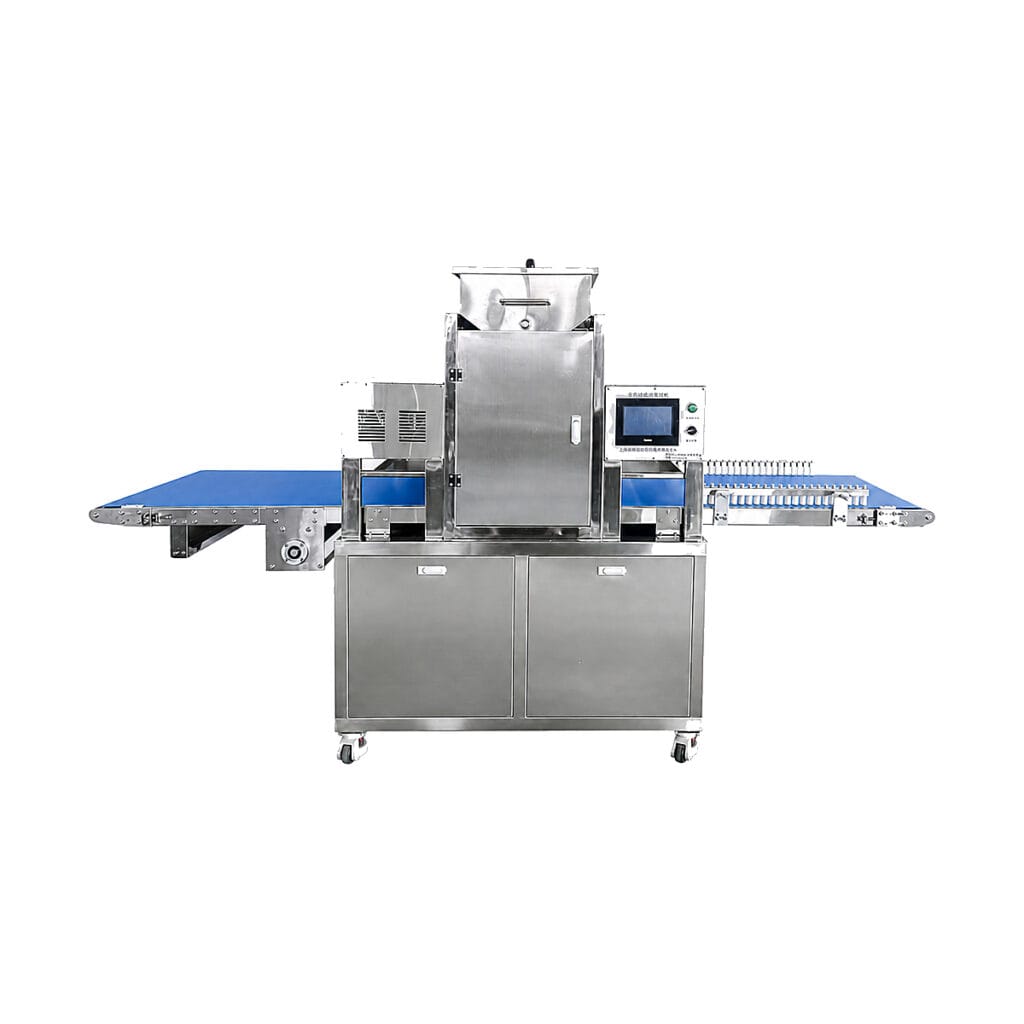
Filling is one of the production stages where relatively small variations can quickly become visible in the finished bakery product. A tart with too little custard, a pastry with filling deposited away from the center, or a production run in which portion size gradually changes can affect appearance, downstream forming, baking behavior, and overall batch consistency.
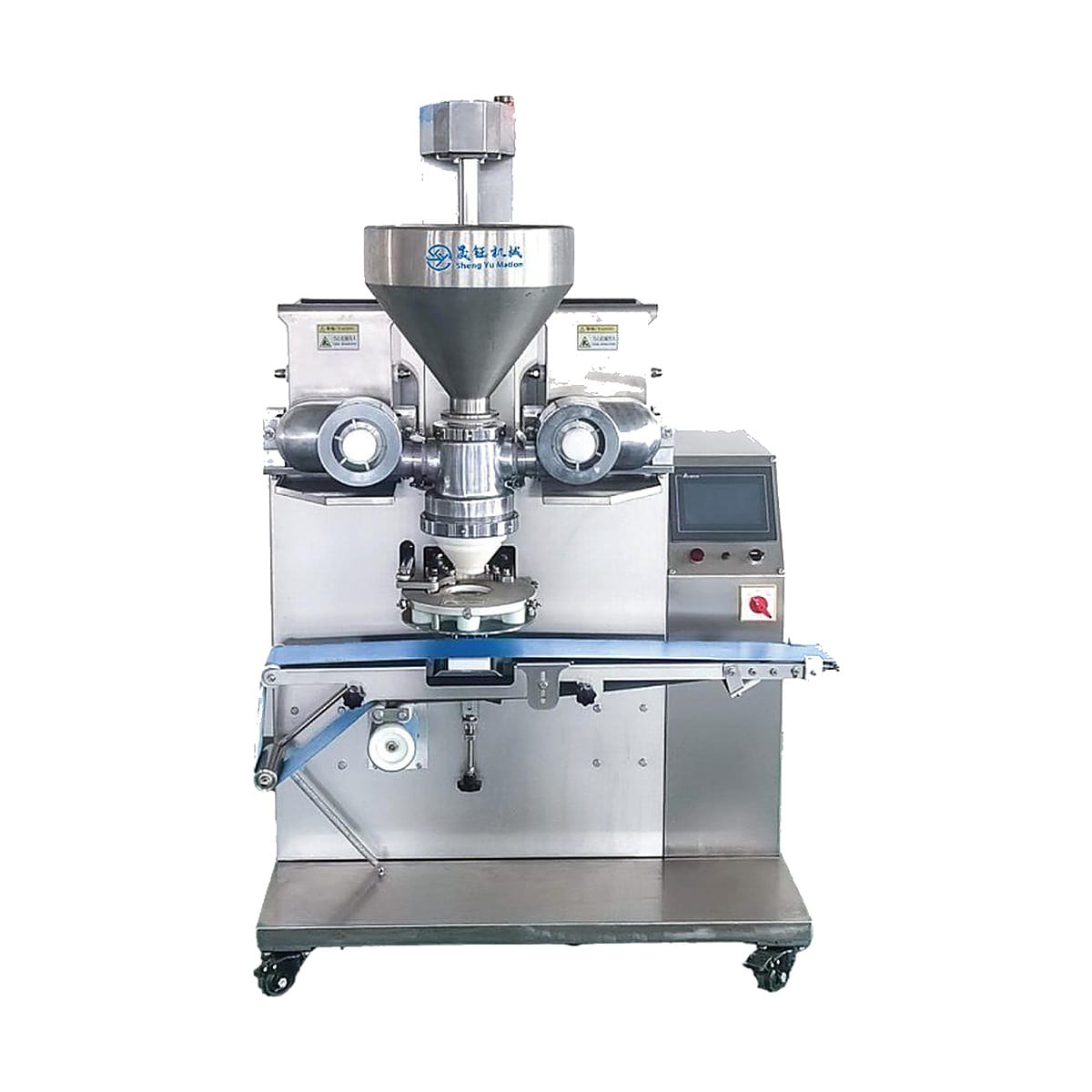
A food filling machine is designed to make this process more repeatable by controlling how a defined amount of liquid, cream, paste, or other suitable food material is transferred into a product or container. In bakery and pastry production, the equipment may work independently or operate as part of a connected process with forming machines, conveyors, sensors, and tray-handling systems.
Accurate filling, however, depends on much more than setting a target portion. Filling viscosity, temperature, product positioning, nozzle geometry, feeding stability, machine timing, and cleaning condition can all influence the actual result. A machine that performs reliably with a smooth custard may behave differently when the formulation becomes thicker or contains inclusions.
Understanding these variables makes it easier to design a filling process around the food itself rather than expecting one setting to work for every product.
What Is a Food Filling Machine?
A food filling machine transfers a controlled quantity of food material from a supply system into a container, shell, pastry, bread product, mold, or another receiving position.
The filling material can vary considerably. Depending on the application, it may be relatively fluid, such as a thin custard or sauce, or much more viscous, such as cream, fruit paste, bean paste, chocolate-based filling, or another dense bakery preparation.
In bakery production, filling is often referred to as depositing because the material is placed in a defined position rather than simply transferred into a closed container.
The process generally involves four functions working together:
material supply, portion control, dispensing, and positioning.
Material first needs to reach the filling mechanism consistently. The machine then meters the required quantity and pushes or allows that material through a dispensing nozzle. At the same time, the pastry, tart shell, tray, or other receiving product must arrive in the correct position.
If any one of these functions becomes unstable, filling accuracy can change even when the machine’s nominal setting has not been adjusted.
How Does a Food Filling Machine Work?
The exact operating principle depends on the filling material and machine design, but most systems follow a similar sequence.
The filling material is held in a hopper, tank, or feeding section. From there, a metering mechanism controls how much material is prepared for each depositing cycle. The filling is then discharged through one or more nozzles when the product reaches the correct position.
A simplified production cycle looks like this:
Product arrives → position is confirmed → filling portion is metered → nozzle dispenses → flow stops → product moves forward.
This sequence may occur repeatedly at a fixed rhythm or be coordinated by sensors and conveyor movement.
The important point is that the food filling machine must control both quantity and timing. Even accurate portioning will not produce a satisfactory result if the filling is deposited before the product reaches the correct position.
In automated bakery production, synchronization therefore becomes just as important as the filling mechanism itself.
Why Filling Properties Matter More Than They Appear
One of the most important factors in filling performance is the physical behavior of the material.
Food fillings are not all equally easy to pump or deposit. Their flow characteristics can change according to formulation, temperature, particle content, fat content, sugar concentration, moisture level, and processing conditions.
A smooth low-viscosity liquid can move quickly through a nozzle. A thick cream or paste requires more force and may stop flowing differently when the dispensing cycle ends.
Some materials also change viscosity with temperature. A filling that flows easily while warm may become substantially thicker as it cools during production.
This means a food filling machine should never be evaluated only according to the target portion size.
The production team should also understand:
how easily the filling flows, whether viscosity changes over time, whether particles are present, whether the material traps air, how quickly it stops after dispensing, and whether it tends to stick to surfaces.
These characteristics influence pump selection, nozzle size, filling speed, shutoff behavior, and cleaning procedures.
A successful filling process begins by matching the equipment to the actual material being processed.
What Determines Filling Accuracy?
Filling accuracy is often described as if it were controlled by a single machine parameter, but in practice several variables interact.
The metering system has an obvious influence. It must repeatedly prepare a similar quantity for every cycle.
However, supply conditions also matter. If the hopper is nearly empty or material enters the metering chamber inconsistently, the filling mechanism may not receive the same conditions every time.
Air trapped in some filling materials can also influence volumetric behavior. Two portions occupying a similar apparent volume may not contain exactly the same amount of product if one contains more entrained air.
Temperature changes can create another source of variation by altering viscosity.
Nozzle behavior matters as well. Filling material remaining at the tip after dispensing can create dripping, while a restricted nozzle may increase pressure and alter flow.
For this reason, filling accuracy should be evaluated as a process rather than simply as a numerical setting on the machine.
Why Nozzle Selection Matters
The nozzle is the final point through which the filling material passes, and its geometry has a direct effect on dispensing behavior.
A nozzle that is too small for a thick filling may restrict flow. This can increase pressure and make the depositing cycle slower or less stable.
A nozzle that is unnecessarily large can make it more difficult to place a small portion accurately, particularly when the receiving product has a narrow opening.
Nozzle length and position are also important.
For some applications, filling can be deposited from above the product. In others, positioning the nozzle closer to the receiving surface can reduce splashing or improve placement.
The relationship between nozzle and product should therefore consider both flow and geometry.
A useful nozzle configuration should allow the filling material to move without excessive restriction while still placing the portion inside the intended area.
When several products are processed on the same equipment, nozzle changes may be necessary rather than relying only on adjustments to filling volume.
How Product Positioning Affects Filling Quality
Accurate metering alone cannot guarantee accurate products.
The pastry, shell, tray, or container must also arrive at the correct location before dispensing starts.
Consider an egg tart shell moving along a conveyor. If the filling quantity remains identical but the shell is positioned several millimeters differently from cycle to cycle, the visual result may still appear inconsistent.
This becomes more important when the receiving opening is small or when subsequent forming depends on the filling remaining centered.
Automated filling systems may therefore use controlled conveyor spacing, mechanical guides, indexing mechanisms, or sensors to establish product position.
The upstream equipment also influences this process.
If a forming machine releases products at irregular intervals, the filling station must compensate for changing spacing. When machines are properly coordinated, products reach the filling position at a predictable rhythm.
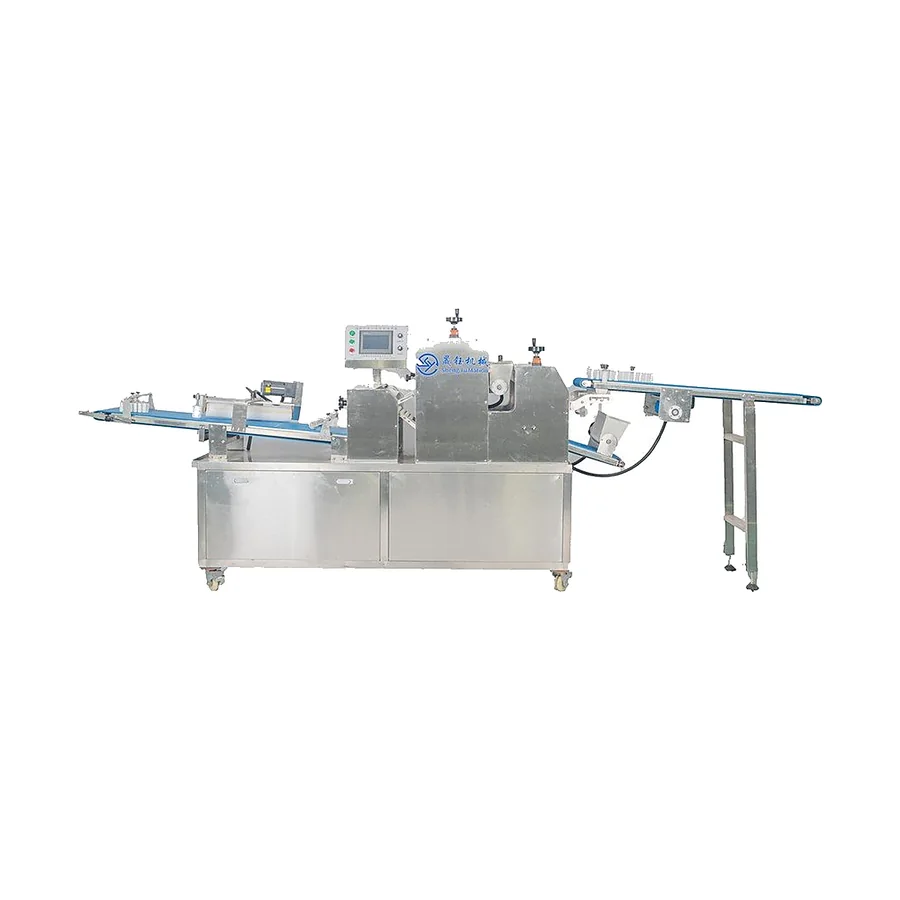
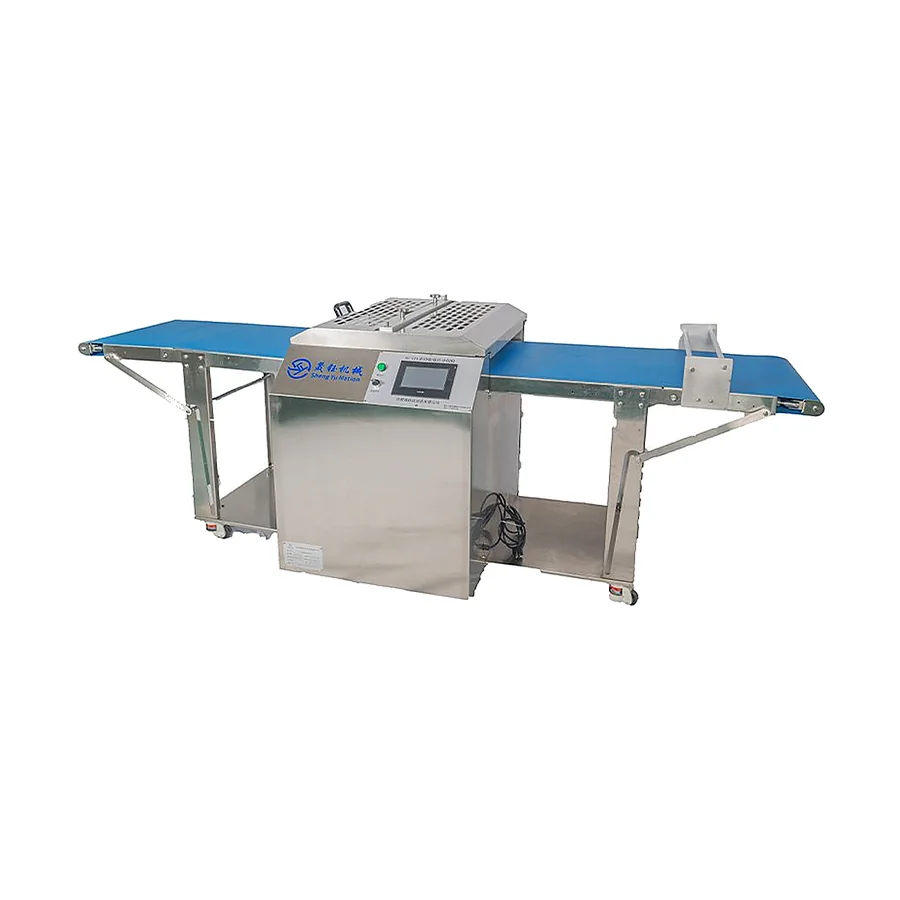
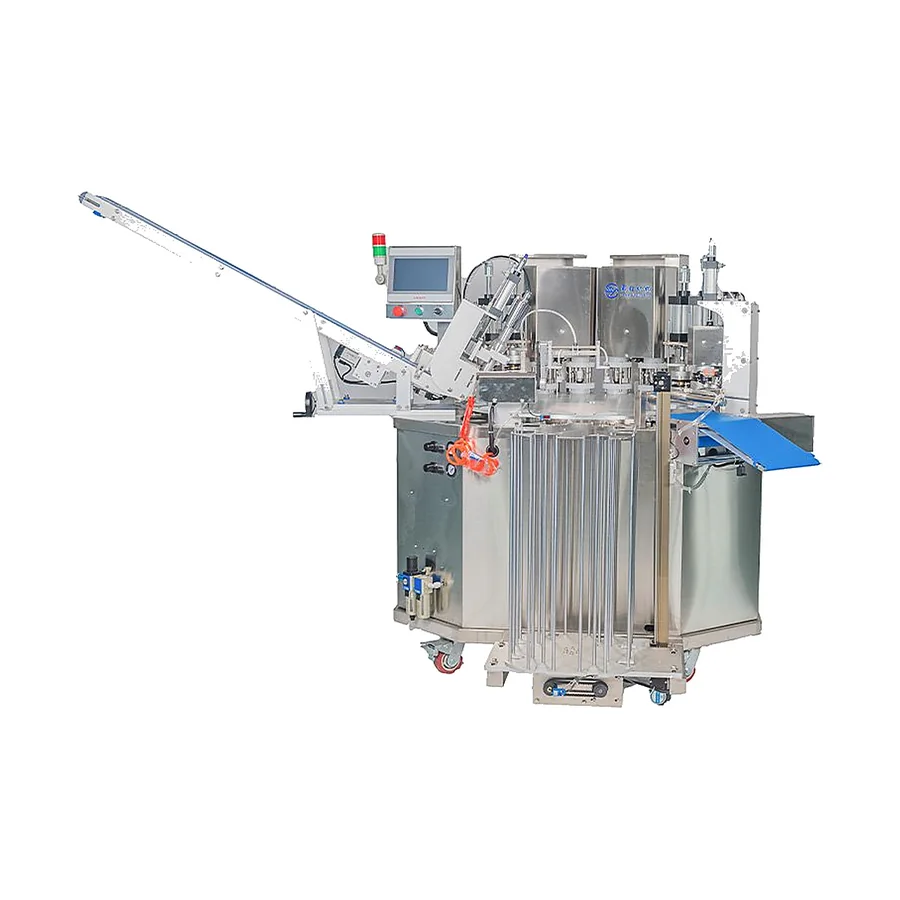
This is one reason filling equipment should be considered together with ShengYu’s broader egg tart production equipment when the application involves formed tart shells rather than being treated as an isolated machine.
How Different Filling Types Change Machine Requirements
The term food filling machine covers a wide range of applications, but equipment requirements can differ significantly according to the material.
A thin liquid usually requires effective flow shutoff to prevent dripping between cycles. A medium-viscosity custard may require a different combination of pressure, nozzle diameter, and dispensing speed.
Dense fillings such as pastes introduce other considerations. They may require more force to move through the system and can create greater resistance at bends, valves, and narrow dispensing points.
Fillings containing particles require additional attention because pieces must pass through the filling path without becoming damaged or blocking the mechanism.
Foamy or aerated fillings can behave differently again because excessive mechanical agitation may change their internal structure.
The following table illustrates why a single filling setup may not suit every material.
| Filling Characteristic | Main Processing Concern | Possible Adjustment Area |
|---|---|---|
| Low viscosity | Dripping or splashing | Shutoff timing and nozzle design |
| Medium viscosity | Portion repeatability | Metering and dispensing speed |
| High viscosity | Flow resistance | Nozzle size and delivery force |
| Temperature-sensitive filling | Changing flow behavior | Material temperature management |
| Filling with particles | Blockage or product damage | Flow path and nozzle diameter |
| Aerated filling | Structure change | Gentle material handling |
The correct machine configuration should therefore begin with actual filling samples whenever possible.
How a Food Filling Machine Fits Into Bakery Production
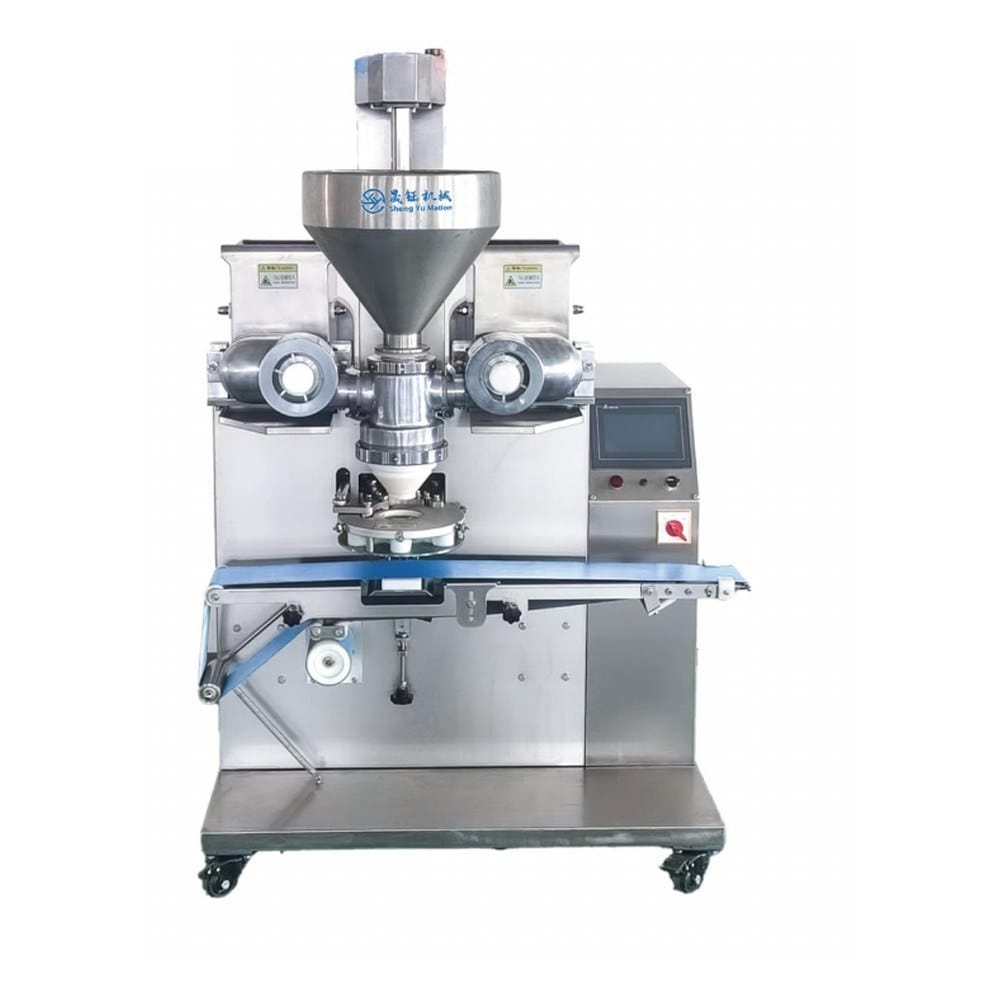
A filling machine rarely determines the entire production process. Its performance depends on what happens immediately before and after depositing.
In tart production, shells first need to be formed and positioned. Filling is then deposited into the open shell before the product moves toward baking or another processing stage.
For filled pastries, the sequence may be different. Dough can be flattened first, filling deposited onto the surface, and the dough subsequently folded or sealed.
Filled bread can require yet another workflow depending on whether filling is introduced before rolling, during forming, or after part of the shape has already been established.
The wider ShengYu bakery and pastry equipment range illustrates why production equipment needs to be considered as a connected process. The filling stage should accept the product in the form created upstream and deliver it in a condition suitable for the following operation.
If these interfaces are poorly planned, even a stable food filling machine can become part of an unstable production line.
Why Synchronization Matters in an Automated Line
Imagine that a filling machine operates at a perfectly repeatable cycle time but products arrive at irregular intervals.
The machine then faces a basic coordination problem.
It may need to wait for products, or a product may arrive too late for the expected depositing cycle. If the upstream conveyor gradually changes product spacing, positioning accuracy can also deteriorate.
This is why automated filling depends on synchronized movement.
Sensors can detect product presence, while conveyor controls can help maintain spacing. In indexed systems, products may stop briefly at a defined filling position. In continuous systems, dispensing may be coordinated with moving products.
Neither method is universally superior.
The correct approach depends on production speed, product stability, filling characteristics, and required placement accuracy.
What matters is that the product movement and filling cycle are designed together.
How to Reduce Dripping After Filling
Dripping is a common issue because many food materials do not stop moving immediately when the filling cycle ends.
Residual pressure inside the system can continue pushing material toward the nozzle. Gravity can also pull remaining filling from the nozzle opening.
Viscosity plays an important role. Some thin materials continue flowing easily after the pumping action stops, while sticky fillings can form strings between the nozzle and product.
Reducing dripping may involve adjustments to shutoff timing, nozzle design, filling pressure, dispensing speed, or the distance between nozzle and product.
However, the source of the problem should be identified before changing settings.
For example, reducing filling speed may appear to solve dripping but could unnecessarily slow the complete production cycle if the actual cause is a worn valve or unsuitable nozzle.
Good troubleshooting separates problems caused by filling properties from those caused by machine settings or component condition.
How to Prevent Splashing and Overflow
Splashing usually occurs when filling enters the product with more energy than the receiving area can accommodate.
This can happen when the dispensing speed is too high, the nozzle is too far above the product, or the filling strikes an angled surface instead of the intended center.
Overflow has a different but related set of causes.
The programmed portion may simply be too large, but inconsistent product dimensions can also be responsible. If tart shells differ in depth, the same filling quantity may fit one shell correctly and overflow another.
This illustrates the relationship between forming and filling.
When upstream product geometry is controlled more consistently, the filling process becomes easier to stabilize. Conversely, highly accurate filling cannot fully compensate for shells or dough pieces that vary significantly in size.
A stable automated line therefore controls both the receiving product and the material being deposited.
How Temperature Can Change Filling Performance
Temperature can have a surprisingly large effect on filling behavior.
Many bakery fillings become thinner when warm and more viscous as they cool. If material temperature changes throughout a production run, the same machine settings may not produce exactly the same flow characteristics.
A thicker material may require more pressure or take longer to move through the nozzle. A warmer, thinner material may flow quickly and become more prone to dripping or splashing.
Temperature differences can also occur between the center and edges of a large supply container if the material is not handled consistently.
Production teams should therefore observe whether changes in filling accuracy coincide with changes in material condition.
When a process performs well at the beginning of a shift but gradually changes later, the cause may not be mechanical wear. Material temperature or viscosity may have changed while the machine remained at the same settings.
Understanding this relationship can prevent unnecessary machine adjustments.
How to Approach Product Changeovers
Many bakeries produce more than one item using the same filling equipment.
A changeover may involve a new filling recipe, different portion size, different nozzle, or different receiving product. Each change affects the process in a different way.
Changing only the target portion is relatively straightforward when the new filling has similar flow behavior.
Switching from a thin custard to a dense paste is more significant because the complete filling path may behave differently.
Product changeovers should therefore be documented rather than treated as informal operator knowledge.
Useful records can include:
filling type, material temperature, nozzle configuration, metering setting, dispensing speed, product dimensions, conveyor setting, and observations from previous runs.
This gives operators a repeatable starting point and reduces the amount of trial-and-error adjustment needed each time a product returns to production.
Cleaning and Hygiene in Filling Equipment
Filling machinery contains surfaces that can come into direct contact with food, making cleanability an important equipment consideration.
Residue may remain in hoppers, nozzles, valves, hoses, metering components, and other parts of the filling path after production. These areas need to be accessible and included in the facility’s appropriate cleaning and sanitation procedures.
Food-contact surfaces should be kept clean, while equipment design should allow convenient access for routine cleaning and sanitation.
Actual cleaning procedures should always be established according to the food product, production environment, applicable regulations, equipment instructions, and the manufacturer’s sanitation requirements.
From an equipment-selection perspective, producers should evaluate more than whether food-contact components are made from suitable materials. They should also examine whether parts can be accessed, removed where necessary, inspected, cleaned, reassembled, and returned to production without creating difficult-to-reach residue areas.
For filling equipment used with sticky custards or pastes, this practical cleanability can have a substantial effect on daily operation.
How to Diagnose Inconsistent Filling Portions
When filling portions begin to vary, immediately changing the target setting is not always the best response.
First determine whether the variation is random or follows a pattern.
If every portion is consistently too large, the metering setting may need adjustment. If portions gradually become smaller, the problem could be related to material supply, viscosity changes, or increasing flow resistance.
If only occasional products receive incorrect portions, check product positioning and triggering.
Air entering the filling path can also cause irregular dispensing in some systems.
A structured troubleshooting sequence can therefore look at:
material condition → supply stability → metering → nozzle condition → product detection → product positioning → machine timing.
Checking these areas one by one makes it easier to identify the actual source of variation.
Changing several parameters simultaneously may temporarily improve the result while making the underlying problem harder to understand.
What Information Is Needed Before Selecting a Filling Process?
A useful equipment discussion should begin with the food product, not simply the phrase food filling machine.
The first requirement is the filling material itself. Its viscosity, temperature, particle content, and tendency to stick or aerate all influence machine configuration.
The required portion range should then be established.
Product dimensions and the size of the filling opening are equally important because they affect nozzle selection and positioning.
The production process also needs to be understood. A standalone filling station has different synchronization requirements from a machine connected directly to an automated forming line.
Other useful information includes the number of filling points, desired product spacing, upstream machine operation, downstream process, available factory layout, and expected frequency of product changeovers.
Providing actual product and filling samples during equipment evaluation can often reveal practical issues that are difficult to identify from specifications alone.
How to Evaluate Filling Quality During Production
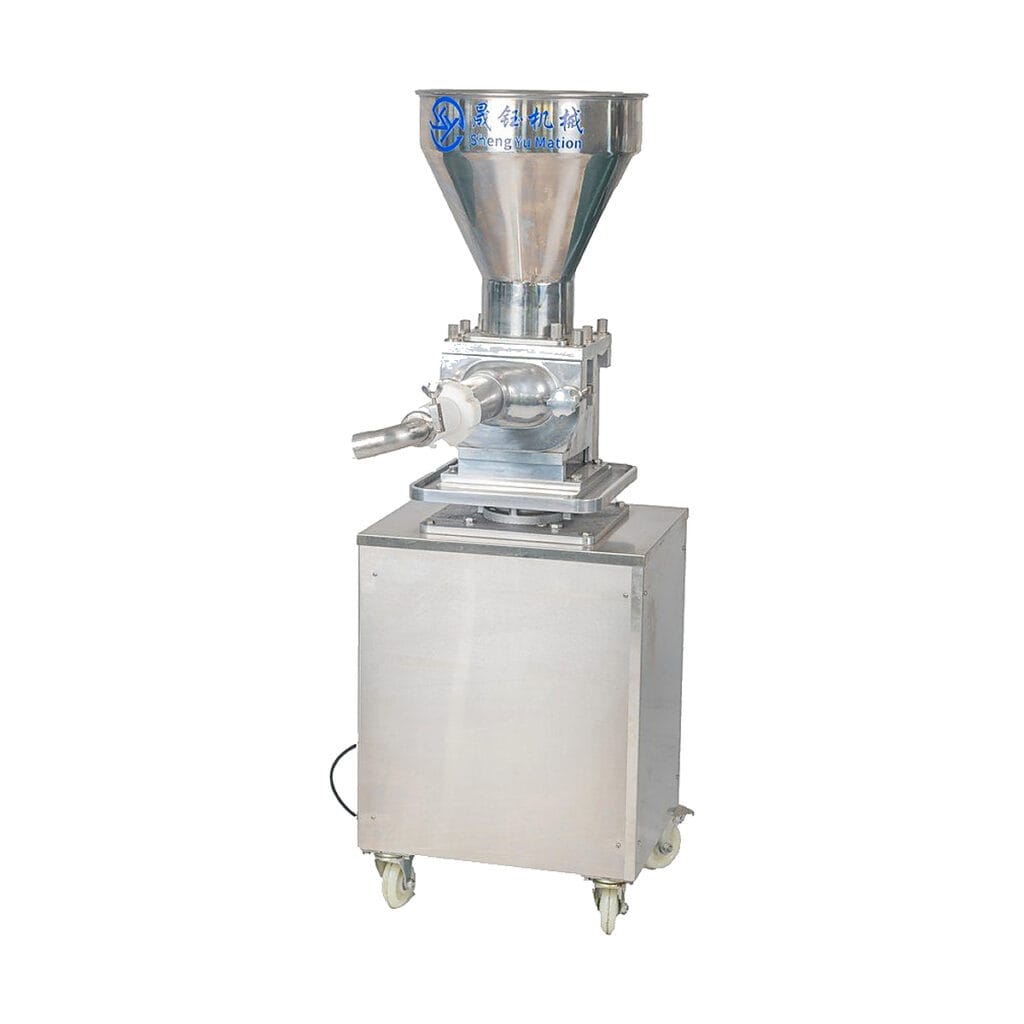
Quality control should focus on the finished filled product rather than only the machine display.
Operators can periodically compare filling portions across several consecutive products and examine whether the filling is consistently positioned.
The receiving product should also be checked. If the shells or dough pieces differ in size, apparent filling inconsistency may actually begin upstream.
Visual checks can identify splashing, stringing, dripping, air pockets, off-center deposits, and contamination around product edges.
Production records can then link these observations with machine settings and material conditions.
Over time, this creates a useful operating window for each product.
Instead of relying on one exact setting under every condition, operators learn the acceptable range of material temperature, dispensing speed, nozzle position, and other variables that consistently produce the required result.
This process knowledge becomes especially valuable when production is transferred between shifts or repeated after a long interval.
Conclusion
A food filling machine is not simply a device that releases a predetermined quantity of filling. Reliable depositing depends on the interaction between food properties, metering, nozzle configuration, material supply, product positioning, conveyor timing, and the surrounding production equipment.
The filling itself should be treated as an engineering variable. Custards, creams, liquids, pastes, and particle-containing fillings behave differently, which means the machine configuration and operating settings need to reflect the actual material.
Upstream consistency is equally important. A perfectly repeatable filling portion can still create inconsistent products when shells vary in size or arrive in the wrong position.
For this reason, the most stable filling processes are designed as part of the complete bakery workflow. When product forming, positioning, depositing, transfer, cleaning, and downstream processing are considered together, filling equipment can provide a much more repeatable foundation for automated pastry and bakery production.
FAQ
What foods can a food filling machine handle?
The suitable products depend on the machine configuration. Filling systems may handle liquids, custards, creams, sauces, pastes, and other bakery fillings, but viscosity, temperature, particle size, and flow behavior must match the filling mechanism and nozzle.
What causes inconsistent filling portions?
Variation can come from unstable material supply, changing viscosity, trapped air, worn or restricted filling components, unsuitable machine settings, or inconsistent triggering. Product positioning can also make accurate portions appear inconsistent when deposits do not land in the intended location.
Why does filling drip from the nozzle?
Dripping may result from residual pressure, low-viscosity material, shutoff timing, nozzle geometry, valve condition, or the filling’s tendency to continue flowing after the dispensing cycle ends. The source should be identified before changing production speed.
Can a food filling machine be connected to a pastry production line?
Yes. Filling equipment can operate with forming and conveying machinery when product spacing, machine timing, filling position, and production speed are coordinated. The exact integration method depends on the pastry and filling process.
What information should be provided when evaluating filling equipment?
Useful information includes the filling material, viscosity or sample, operating temperature, required portion, product dimensions, filling opening, production sequence, upstream and downstream equipment, and available factory layout.