
Reliable pastry production depends on equipment that is clean, correctly adjusted and ready for each shift. A short daily maintenance routine can help operators identify wear, product buildup or unusual machine behavior before these issues affect production. The following checks apply to many dough processing, forming, filling and conveying machines, but the equipment manual and site safety procedures should always take priority.
Start With a Safe Shutdown
Before cleaning or inspection, stop the machine, isolate the relevant power sources and confirm that moving parts have come to a complete stop. Follow the facility’s approved safety procedure. Never reach into forming areas, rollers or conveyors while the equipment is operating.
Clean Product-Contact Areas
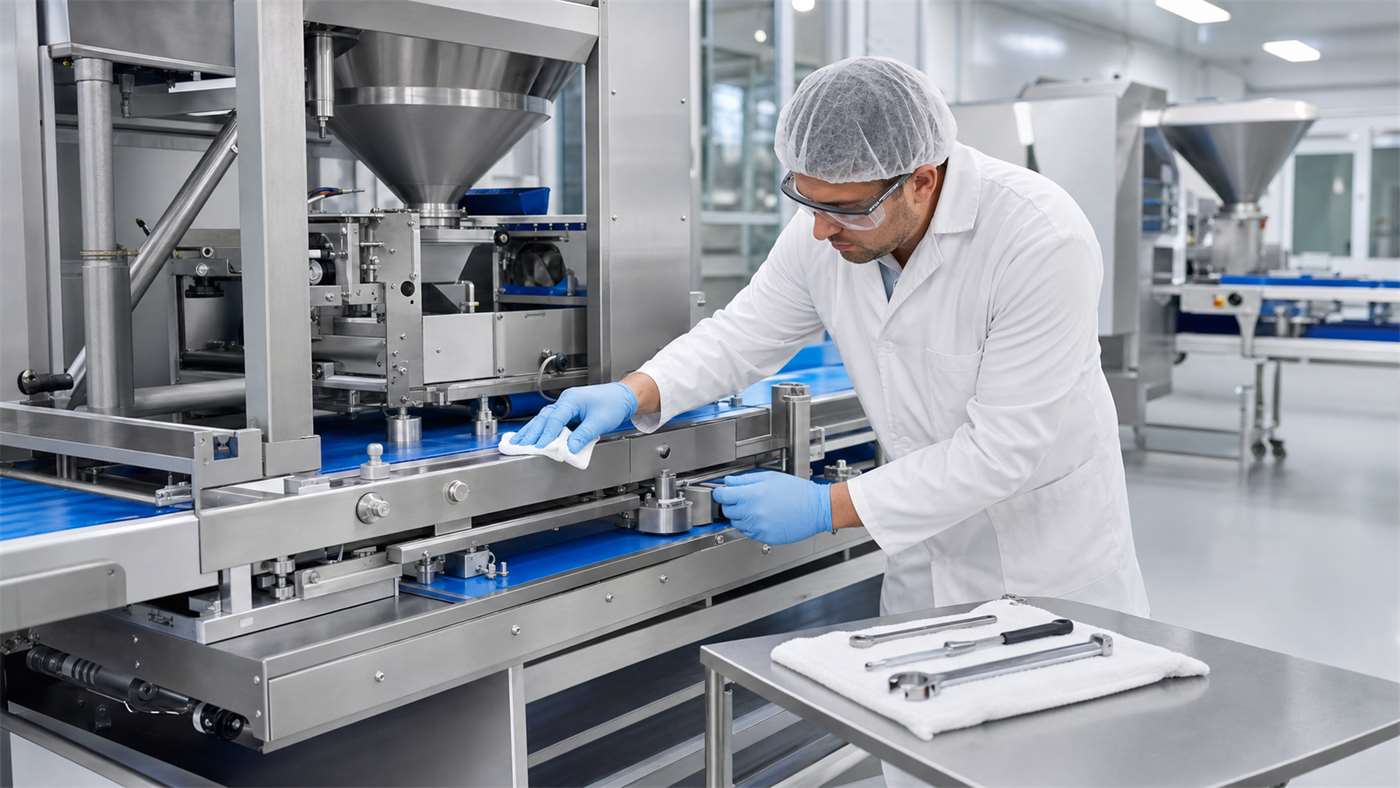
Remove dough, flour, oil and filling residue from food-contact parts after production. Pay close attention to hoppers, nozzles, molds, rollers, scrapers and conveyor surfaces. Use cleaning methods and products that are suitable for the equipment materials. Avoid spraying water directly onto electrical controls, motors or sensors unless the machine documentation specifically permits it.
Inspect Belts and Transfer Points
Check conveyor belts for residue, damage, incorrect tracking or unusual looseness. Also inspect guides and transfer points where products move between machines. A small alignment problem can lead to uneven spacing, product deformation or stoppages. Adjustments should only be made by trained personnel according to the manufacturer’s instructions.
Check Fasteners and Moving Components
Look for loose fasteners, unusual vibration and visible wear around chains, bearings, rollers and forming components. Listen for new or abnormal sounds during the approved startup check. Do not apply extra lubricant without confirming the correct lubricant, application point and maintenance requirement. For food machinery, only suitable products should be used where incidental food contact may be possible.
Review Sensors and Controls
Keep sensor surfaces clean and check that guards, emergency stops and control buttons appear secure and undamaged. If the display shows an alarm or repeated error, record the message instead of repeatedly restarting the machine. Persistent faults should be referred to qualified technical personnel.
Keep a Simple Maintenance Record
Record cleaning, inspections, adjustments and any unusual observations at the end of each shift. A consistent log helps teams track recurring issues and plan service before a small problem becomes a longer interruption.
Daily care does not replace scheduled preventive maintenance, but it supports cleaner production, stable machine operation and more consistent pastry quality. If a component is damaged or its condition is uncertain, stop using the equipment and request technical assistance.