
Table of Contents
Introduction
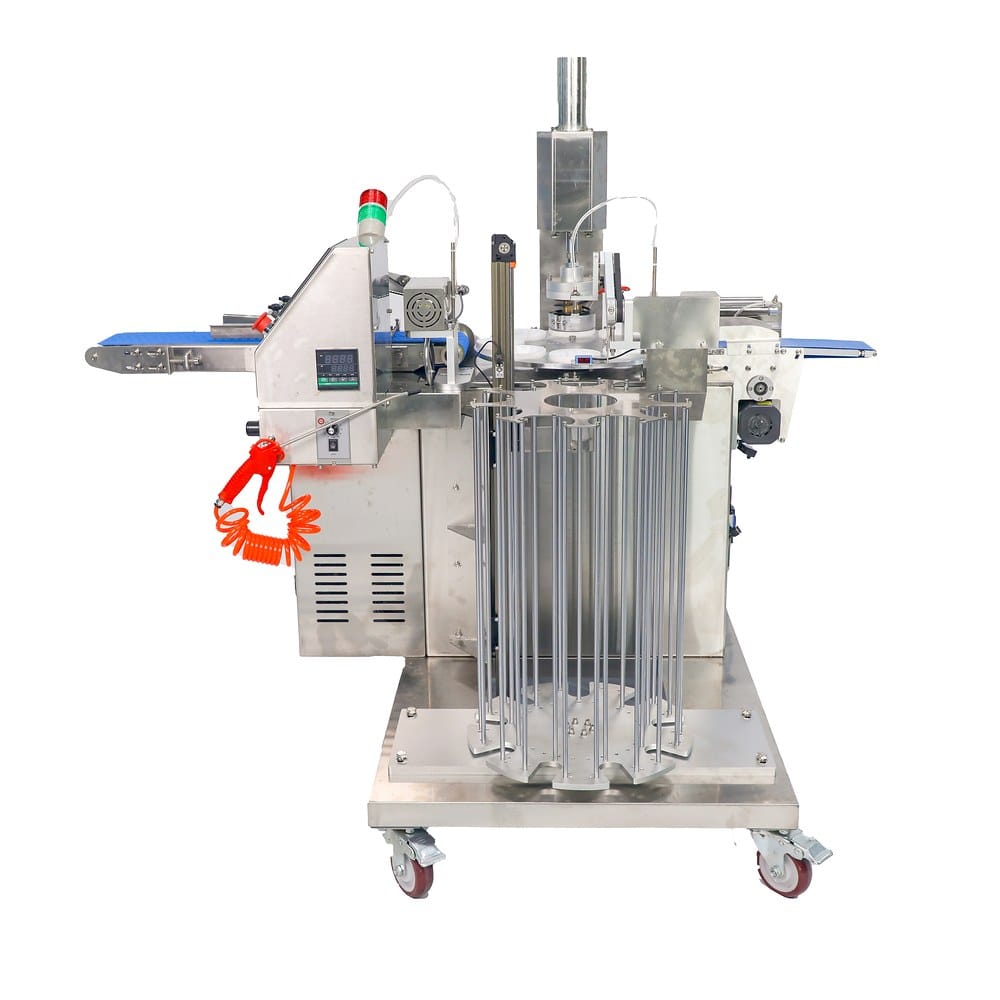
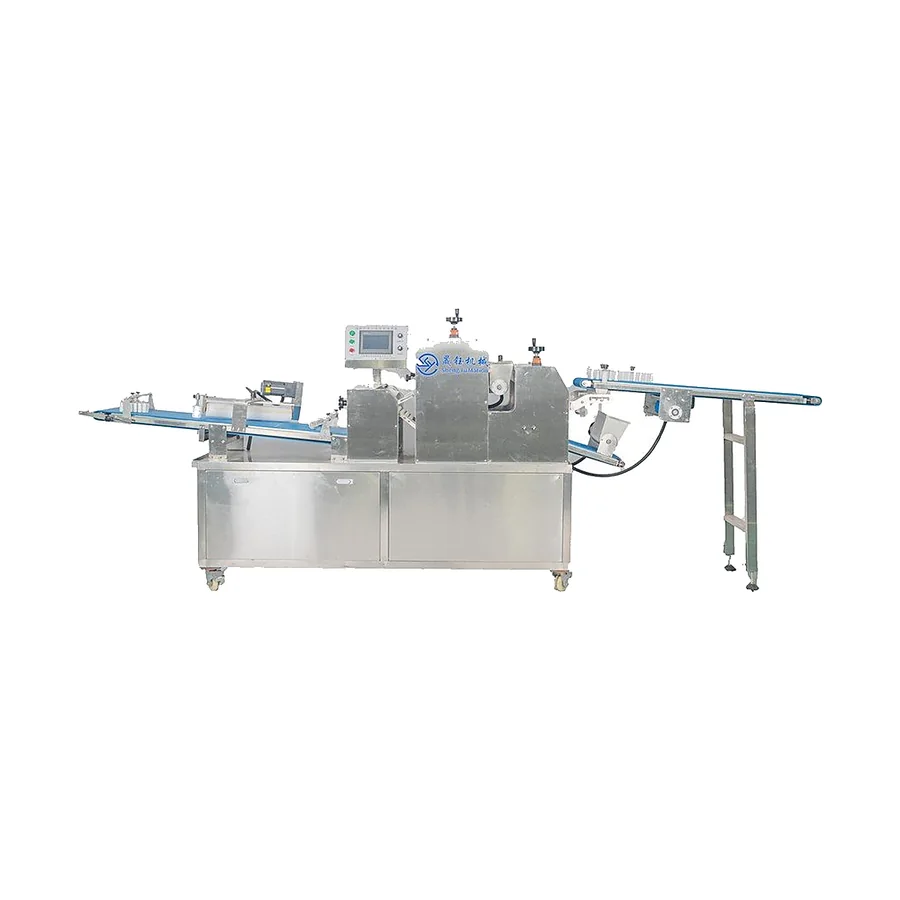
Egg tart production looks simple when viewed only from the finished product: a pastry shell is formed, filled with custard, and prepared for baking. In actual production, however, achieving the same shell dimensions, dough distribution, filling level, and tray position across a large number of tarts requires several processes to remain closely coordinated.
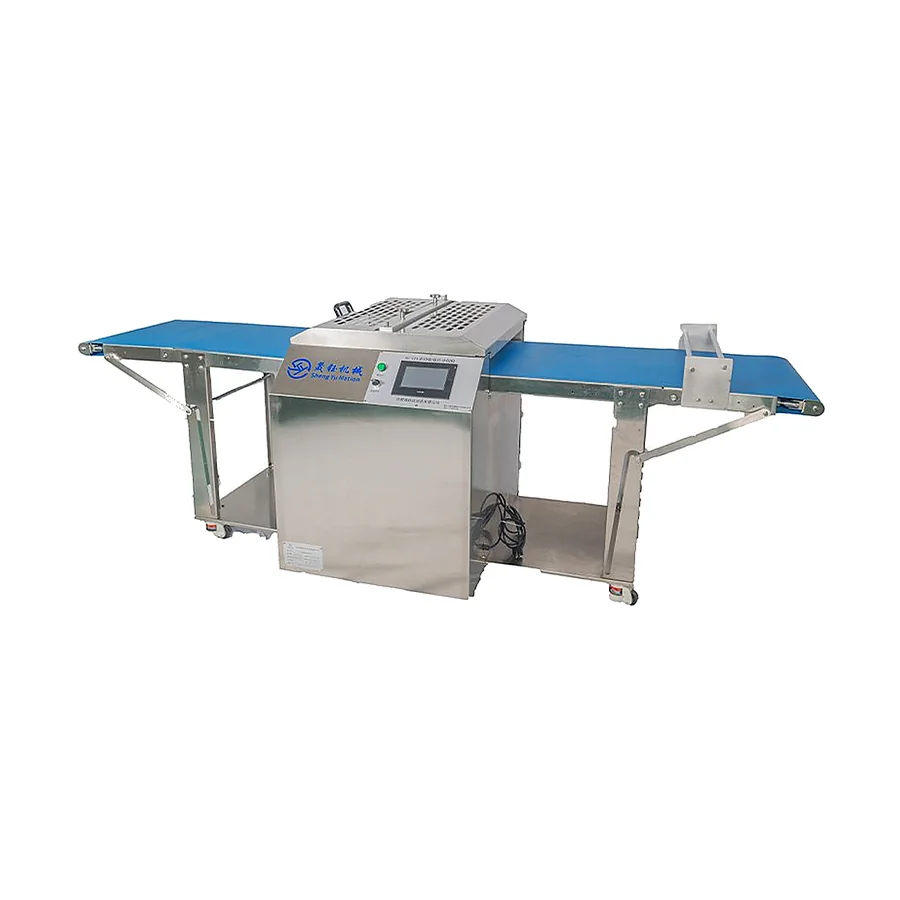
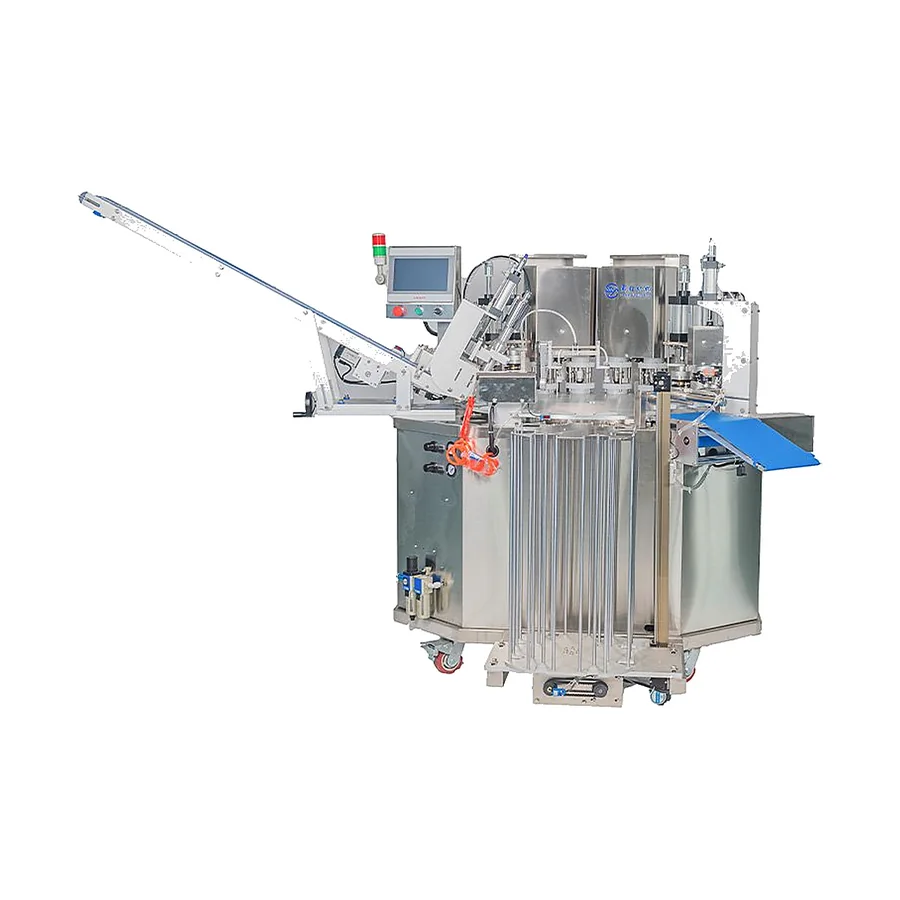
An automatic egg tart machine helps turn these repeated operations into a controlled production sequence. Depending on the configuration, automation can cover dough portioning, shell forming, tart liquid filling, product conveying, and tray arranging. The objective is not simply to make the process faster. More importantly, automation creates repeatable mechanical movements that reduce variation between products.
The correct configuration depends heavily on the egg tart style being produced. Portuguese-style, English-style, and other tart products can differ in dough structure, mold geometry, shell depth, edge profile, and filling requirements. For this reason, an automatic egg tart machine should be evaluated as part of a complete process rather than as a single standard machine suitable for every tart.
What Is an Automatic Egg Tart Machine?
An automatic egg tart machine is equipment used to automate one or more stages of egg tart shell forming and related production processes.
In practical production, the term can refer to different levels of automation. Some systems focus primarily on pressing dough into tart molds. Others combine forming with automatic feeding, product transfer, filling, or tray-handling functions.
The finished product itself also determines how the equipment needs to work. An egg tart normally consists of a pastry shell containing an egg-based custard filling, but different regional styles use different crust structures and finished shapes. These differences affect forming pressure, dough preparation, tooling geometry, and later filling operations.
This means the machine should not be selected only according to the words “automatic egg tart machine.” The actual production requirement should first define the product, and the equipment configuration should then be built around that process.
How Does an Automatic Egg Tart Machine Work?
The forming process normally begins with prepared dough portions or dough pieces entering a mold or forming position.
The dough needs to be located accurately because the forming tool applies pressure according to a fixed mold geometry. Once the dough reaches the correct position, the forming mechanism presses it against the mold surface and distributes the dough around the base and side walls.
After forming, the tool retracts and the tart shell moves to the next stage. Depending on the automation level, this may involve manual transfer, conveyor transfer, automatic filling, or tray arranging.
A simplified process can be represented as:
Dough preparation → portion placement → shell forming → release → filling → tray transfer
More integrated production systems can automate a greater number of these stages.
The forming movement itself may take only a short time, but the quality of the shell depends on everything that happens before and during that movement. Dough quantity, temperature, mold position, forming pressure, tool geometry, and release behavior must all remain within a stable operating range.
Why Dough Preparation Determines Forming Quality
The automatic forming machine can repeat the same mechanical movement cycle after cycle, but it cannot make inconsistent incoming dough behave identically.
Dough condition therefore becomes one of the most important variables in automated tart production.
If dough pieces vary significantly in weight, one shell may contain more material than another. Excess dough can collect around the edge of the mold, while insufficient dough may leave part of the shell too thin.
Temperature also affects how the dough behaves under pressure. Dough that becomes too soft may stick, stretch excessively, or lose its shape after forming. Dough that is too firm may resist spreading evenly into the mold.
For layered or laminated tart dough, mechanical handling requires additional care because the internal structure contributes to the finished pastry texture.
Upstream dough preparation should therefore aim to deliver portions with reasonably consistent dimensions, quantity, and physical condition.
Automation becomes much more effective when the material entering the machine is already controlled.
How Tart Shell Forming Actually Happens
Tart forming is essentially a controlled distribution process.
A dough portion is placed inside or over a tart mold, after which the forming tool moves into position. As pressure is applied, the dough spreads across the mold base and moves upward along the side walls.
The final shell shape is created through the relationship between dough quantity, mold geometry, tool profile, forming depth, and pressure.
If too much force is applied too quickly, some doughs may tear or become excessively thin in certain areas. If pressure is insufficient, the dough may not fully reach the intended shell geometry.
The edge of the tart is especially important because it often contains visible decorative features or defines the finished height of the shell.
Accurate alignment between the forming head and mold also matters. Repeated off-center pressure can produce uneven wall thickness even when dough portions are consistent.
This is why a forming machine should be adjusted using the actual dough, mold, and finished product specifications rather than relying only on general machine settings.
Why Portuguese and Other Egg Tart Styles Need Different Settings
Not all egg tarts use the same pastry structure.
Portuguese-style egg tarts are commonly associated with laminated pastry structures and a custard filling, while other egg tart styles may use different crust formulations and shell geometries.
These differences influence the forming process.
A laminated dough needs to retain enough of its internal layer structure while still being shaped into the mold. Excessive compression or inappropriate dough temperature can affect how those layers behave.
A different tart style may use dough that behaves more like a short pastry, which can respond differently to forming pressure.
Mold dimensions also vary. Shell diameter, depth, wall angle, bottom thickness, and decorative edge profile can all change the tooling requirements.
An automatic egg tart machine should therefore provide a controlled process around the specific product rather than treating all tart varieties as mechanically identical.
ShengYu’s egg tart production equipment includes equipment developed around different egg tart forming requirements, allowing the process to be considered according to the actual tart style and production workflow.
Which Parameters Most Affect Tart Shell Consistency?
Several machine and material variables directly affect the repeatability of formed shells.
| Parameter | What It Influences | Possible Result if Unstable |
|---|---|---|
| Dough portion size | Amount of material in each shell | Uneven wall or edge thickness |
| Dough temperature | Softness and forming behavior | Sticking or poor material distribution |
| Mold alignment | Position of the shell | Uneven side walls |
| Forming pressure | Dough distribution | Tearing or incomplete forming |
| Forming depth | Final shell geometry | Different shell heights |
| Tool profile | Edge and inner shape | Inconsistent product appearance |
| Release condition | Shell removal | Deformation after forming |
| Production timing | Machine-to-machine coordination | Irregular downstream flow |
These variables should not be adjusted independently without considering their interaction.
For example, increasing forming pressure may appear to solve incomplete shell formation, but the real cause might be dough that is too firm. Changing pressure alone could then create new problems once dough temperature returns to normal.
Stable production requires identifying the actual source of variation.
How Filling Connects With Automatic Tart Forming
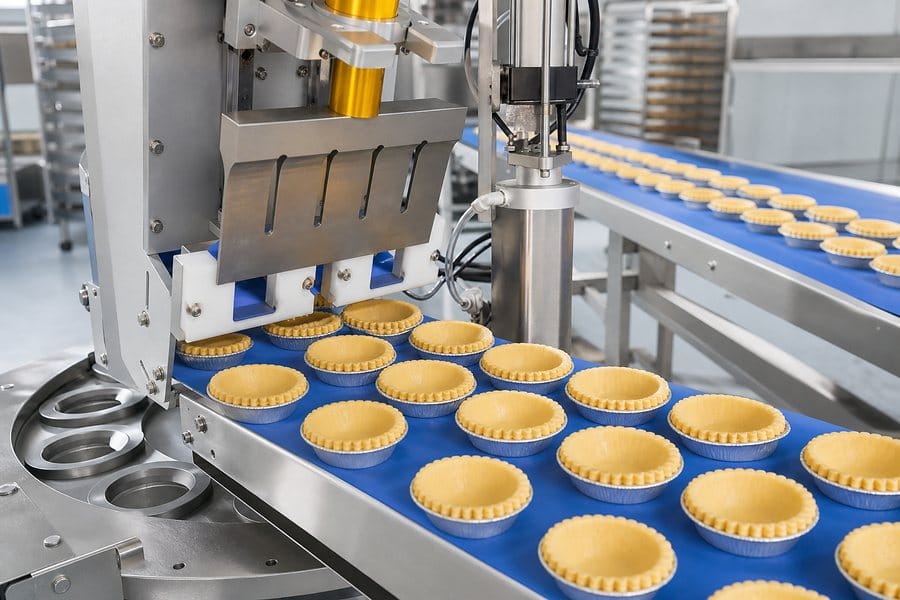
Once the shell is formed, tart liquid or custard can be deposited into it.
The transition between forming and filling is an important part of automated production because the shell must reach the filling position without losing alignment.
If shell spacing changes during transfer, the filling nozzle may no longer deposit at the center. If shells vary in dimensions, the same filling portion can create different final filling heights.
The filling process therefore depends partly on how consistently the forming stage produces and transfers each tart shell.
Filling quantity also needs to leave sufficient space for the product’s later behavior during baking. The correct portion is determined by shell dimensions, recipe, and production requirements rather than by machine capacity alone.
The filling mechanism must also match the physical properties of the tart liquid. Temperature and viscosity can affect how easily it flows through the dispensing system and how cleanly the flow stops at the end of each cycle.
In an integrated egg tart production process, forming and filling should therefore be developed together.
Why Product Positioning Matters Between Machines
Automatic production relies on predictable product position.
During manual production, an operator can visually correct a tart that is slightly out of place. Automated equipment instead depends on guides, molds, sensors, conveyors, or indexing systems to keep each product in the expected location.
This becomes particularly important between forming and filling.
A correctly formed shell can still receive an off-center filling if its position changes during transfer. Likewise, a filling station operating accurately cannot compensate for irregular shell spacing without an appropriate positioning mechanism.
Transfer speed should also be controlled.
Sudden differences between conveyor speeds can shift lightweight tart shells, while poorly designed transfer points can create unnecessary movement between machines.
Reliable egg tart automation therefore requires attention not only to the main machines but also to the relatively simple sections connecting them.
Automatic vs Semi-Automatic Egg Tart Production
The appropriate automation level depends on the production environment.
A semi-automatic system may use mechanical forming while operators continue to position dough, molds, or products manually. This can provide greater flexibility when production volume is moderate or when product styles change frequently.
A more automatic system can reduce repeated manual feeding and transfer tasks by coordinating forming with conveyors or other processing stages.
Neither option is automatically the correct choice for every bakery.
| Factor | Semi-Automatic Process | More Automated Process |
|---|---|---|
| Manual involvement | Higher | Lower in repeated operations |
| Product change flexibility | Often easier | Depends on tooling and setup |
| Line integration | Limited or partial | Greater potential |
| Product positioning | More operator dependent | More mechanically controlled |
| Best suited to | Flexible or moderate production | Repeated standardized production |
The decision should begin with current production problems.
If shell forming itself creates the greatest inconsistency, automating that stage may provide substantial benefit without immediately automating the entire process. If forming is already stable but manual transfer and filling create bottlenecks, a more integrated configuration may be appropriate.
How Automation Improves Repeatability
The primary advantage of an automatic egg tart machine is repeatability.
Manual forming depends on the operator applying similar pressure and positioning the dough correctly every time. Skilled operators can achieve excellent products, but repeating exactly the same movement hundreds or thousands of times becomes more difficult.
Automated equipment performs a defined mechanical cycle.
Once tooling position, forming depth, pressure, and timing are established, the machine can repeat the same movement more consistently.
This helps reduce process variation, although it does not eliminate the importance of material control.
If dough portions suddenly become larger, the machine will still repeat its forming cycle accurately—but the products can become inconsistent because the incoming material changed.
Automation should therefore be understood as a way to stabilize a well-defined process, not as a substitute for dough preparation and production control.
How to Identify the Real Bottleneck in Egg Tart Production
A bakery considering automation should first determine which stage currently limits production.
The answer is not always forming.
For some operations, manually pressing shells may be the slowest stage. In others, shell forming may already be relatively efficient while manual filling or tray placement prevents production from becoming continuous.
Observation can help identify the bottleneck.
Record where products accumulate, where operators need to wait, which stage requires the most repeated correction, and where dimensional differences first become visible.
If shells already vary before entering the filling station, the problem is likely upstream. If formed shells are stable but production stops while trays are manually positioned, later automation may provide greater value.
This process-based evaluation prevents equipment from being added simply because a particular machine is available.
How Tray Arranging Fits Into the Process
After forming and filling, egg tarts normally need to remain correctly positioned for downstream handling and baking.
Tray arranging becomes more important as upstream production becomes faster.
When products arrive continuously, manual placement can become the new limiting stage. An automatic arranging system can help transfer products according to a defined tray layout.
However, tray automation needs information from the product and tray.
Tart diameter, product spacing, tray dimensions, number of positions, and required orientation all affect how the arranging process should operate.
There also needs to be coordination between product arrival and tray availability. If a filled tray needs to be exchanged while products continue arriving, the system must prevent products from accumulating uncontrollably.
This demonstrates why an automatic egg tart machine should be viewed as part of a larger production workflow rather than a standalone piece of equipment.
What Should Be Checked During Product Changeover?
Egg tart producers may need to switch between tart sizes, molds, dough formulations, or styles.
A changeover can affect much more than one setting.
Different mold diameters can require different dough portions. A deeper shell may need more material, while a different dough formulation may require adjustments to temperature or forming pressure.
The filling portion may also change when shell volume changes.
Useful changeover records can include:
mold specification, dough portion size, dough temperature range, forming position, forming pressure or depth setting, filling portion, conveyor spacing, and tray configuration.
Recording successful configurations reduces the need to rebuild the process from memory every time a product returns to production.
For manufacturers operating several tart styles, repeatable changeover procedures can become just as important as maximum production speed.
Common Egg Tart Forming Problems and Their Causes
Uneven shell thickness is one of the most common forming issues. It may result from inconsistent dough portions, off-center placement, mold alignment, or unsuitable forming pressure.
Dough sticking to the forming tool can be influenced by dough condition, temperature, contact surface condition, or the release method.
Tearing may occur when the dough does not have suitable extensibility or when pressure distributes the material too aggressively.
Incomplete edges can appear when the dough quantity is insufficient or when material does not fully reach the required mold profile.
Shell deformation after forming may happen during release or transfer rather than inside the forming station itself.
A useful troubleshooting method is to examine the product at several points in the process.
Check the dough before forming, immediately after forming, after release, and again after transfer. This identifies where the defect first appears and prevents unnecessary adjustments to a machine that may not be causing the problem.
How to Maintain Stable Automatic Production
Routine maintenance should focus on the components that directly affect forming repeatability and product transfer.
Forming tools and molds should remain clean and free from accumulated dough material. Buildup can gradually change contact conditions and affect shell release.
Moving components should be inspected according to the machine’s maintenance requirements, while guides and positioning mechanisms should remain correctly aligned.
Conveyors should be checked for tracking and stable movement because changes in transfer can affect product spacing even when the forming machine itself operates normally.
Sensors and detection points should remain clean and correctly positioned where they are used to coordinate automatic movements.
Production teams should also keep operating records for repeat products. When a previously stable product suddenly changes, comparing current material conditions and machine settings with earlier records can make troubleshooting much more efficient.
How to Plan an Egg Tart Automation Process
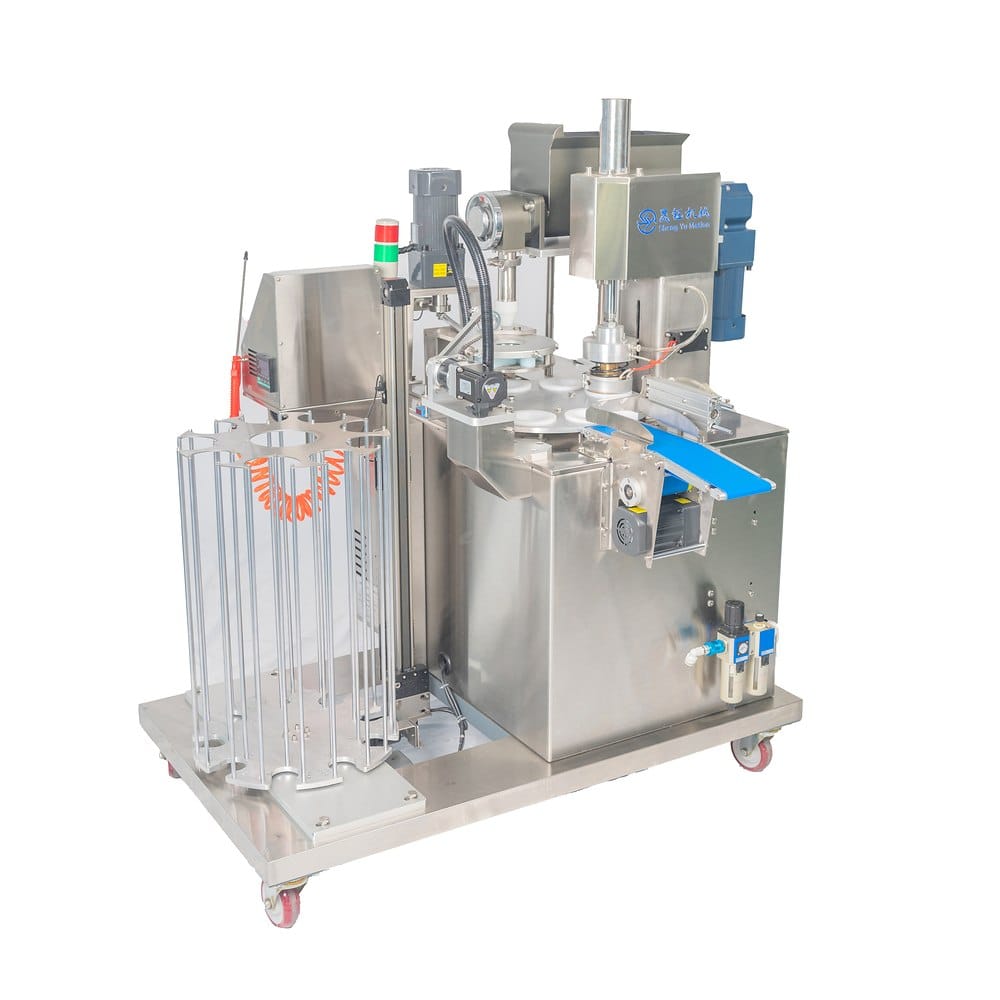
Planning should start with the finished egg tart.
First define the tart style, diameter, depth, crust structure, edge profile, and filling requirement.
Next examine the dough preparation process. Determine how dough portions are produced, how consistent they are, and what temperature or resting conditions are required before forming.
The forming stage can then be evaluated according to mold geometry and desired shell structure.
After that, consider filling. Define the filling material, portion, viscosity, and required placement.
Finally, examine downstream handling. Determine how products should move to trays and whether manual or automatic arranging is appropriate.
This creates a process-development sequence such as:
Product specification → dough preparation → forming → filling → transfer → tray handling.
ShengYu’s wider bakery and pastry equipment range can then be considered according to which parts of this sequence need to be mechanized or connected.
This method produces a more practical result than selecting an automatic egg tart machine first and attempting to design the product around the machine afterward.
Conclusion
An automatic egg tart machine can improve the repeatability of tart shell forming by replacing repeated manual movements with controlled mechanical operations. However, consistent production depends on much more than the forming machine itself.
Dough portion size, dough temperature, mold geometry, tool alignment, forming pressure, shell transfer, filling position, conveyor timing, and tray handling all influence the final product.
The most effective automation therefore begins with the egg tart itself.
By defining the product style, shell dimensions, dough behavior, filling requirements, and complete production sequence before configuring equipment, manufacturers can build a process in which each stage supports the next.
Automation delivers the greatest value when it stabilizes a process that has already been clearly understood and defined.
FAQ
What does an automatic egg tart machine do?
An automatic egg tart machine automates repeated egg tart processing operations, particularly shell forming. Depending on the configuration, forming can also be coordinated with feeding, filling, conveying, or tray-handling stages.
Can one machine produce different egg tart styles?
This depends on the machine design, mold structure, tooling, dough characteristics, and size range. Different tart styles may require tooling changes and different forming settings rather than using one unchanged configuration.
Why are egg tart shells sometimes uneven after forming?
Uneven shells can result from inconsistent dough portions, off-center placement, incorrect mold alignment, unsuitable dough temperature, or forming settings that do not distribute the dough evenly.
Can automatic forming be connected to a tart filling machine?
Yes. Forming and filling can be integrated when product spacing, shell position, production timing, filling portion, and conveyor transfer are properly coordinated.
What information is needed before configuring egg tart equipment?
Useful information includes the egg tart style, shell diameter and depth, dough formulation and condition, dough portion size, mold or tray information, filling material, desired processing sequence, and available production layout.