
Table of Contents
Introduction
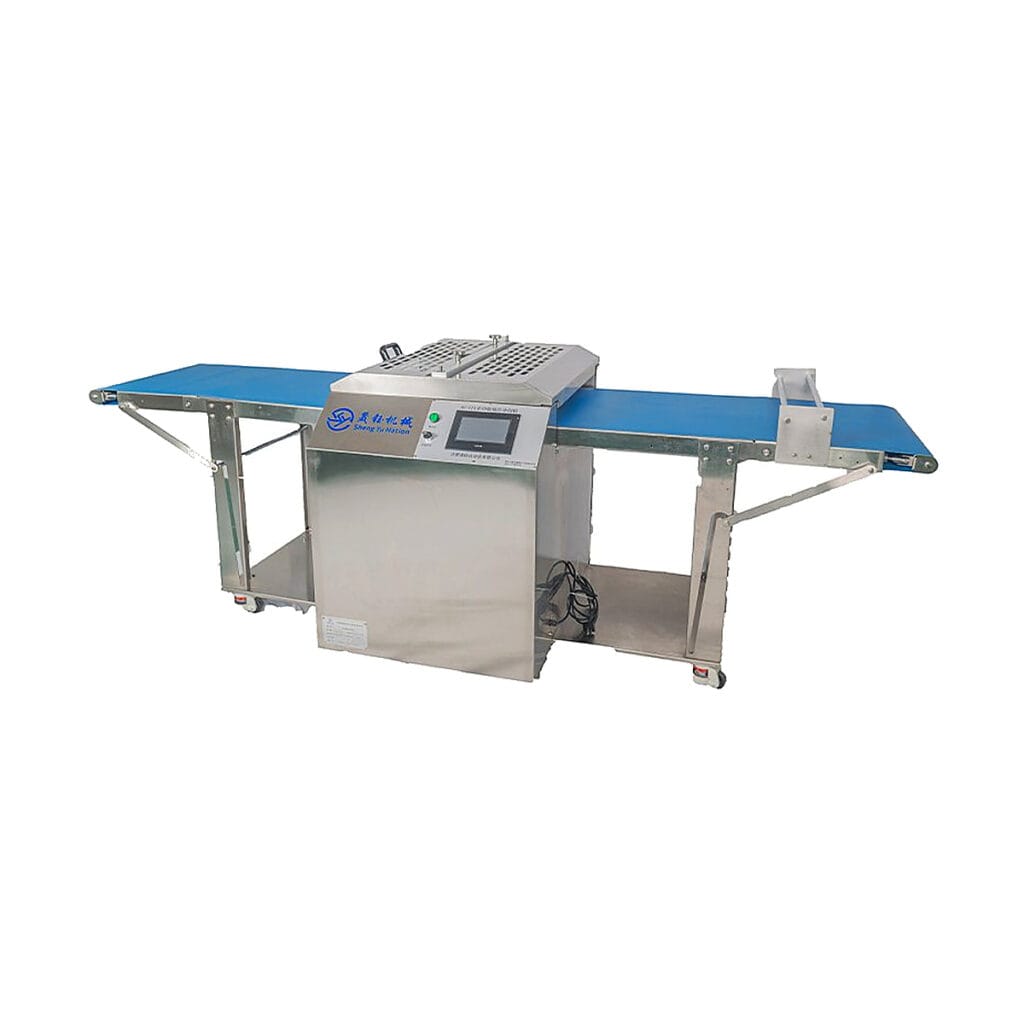
In bakery production, rolling dough to the correct thickness is not simply a preparation step. It can influence cutting accuracy, product weight, forming stability, layer structure, filling performance, and even the way a finished pastry behaves during baking. When thickness varies across a sheet, those differences often continue into every downstream operation.
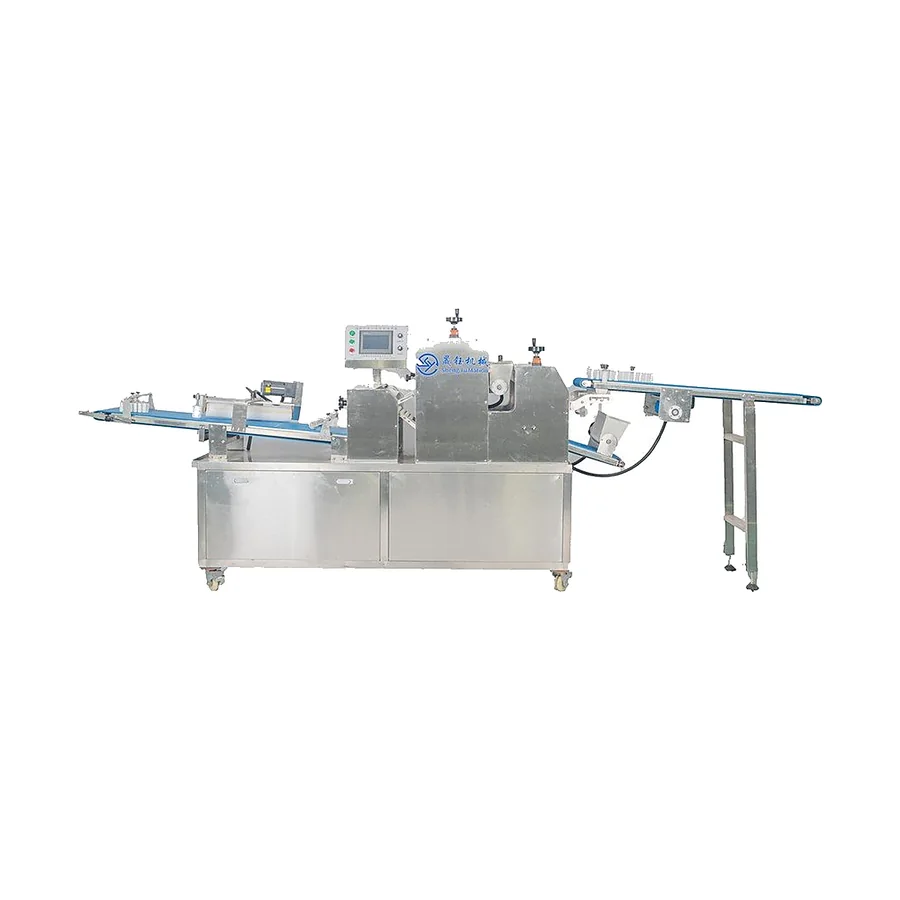
A bakery dough sheeter introduces controlled mechanical rolling into this process. Dough passes through rollers that progressively reduce its thickness while creating a more uniform sheet for later cutting, folding, laminating, forming, or filling.
The challenge is that bakery dough is not a standardized industrial material. Croissant dough behaves differently from cookie dough. Tart dough does not respond to pressure in the same way as soft bread dough. Temperature, hydration, fat content, gluten development, and resting time can all change the way a dough moves through the rollers.
For this reason, successful sheeting depends on understanding both the machine and the dough. The objective is not simply to produce the thinnest possible sheet, but to create the thickness, structure, width, and surface condition required by the next production stage.
What Does a Bakery Dough Sheeter Actually Do?
A bakery dough sheeter reduces dough thickness by passing the material between rotating rollers with a controlled gap.
As the dough enters the roller section, mechanical pressure causes it to become thinner and longer. In many processes, the required final thickness is reached gradually rather than in one aggressive reduction.
The broader process is known as dough sheeting, which is widely used for pastries, laminated dough, bread products, flatbreads, and other applications requiring controlled dough sheets.
However, thickness reduction is only one part of the machine’s role.
A useful bakery dough sheeter should prepare dough in a condition that downstream equipment can process reliably. This can involve maintaining suitable width, reducing abrupt dimensional changes, controlling sheet direction, and transferring dough without unnecessary stretching.
In an automated bakery, the output from the sheeting stage may continue directly toward cutting or forming equipment. This makes repeatability more important than simply completing the rolling operation.
Why Thickness Control Matters in Bakery Production
A difference of only a small amount in dough thickness can become much more visible after cutting, forming, or baking.
Consider dough that will later be cut into equal-sized pieces. The cutter may produce identical dimensions, but thicker sections contain more dough than thinner sections. The result is products that have the same outline but different material quantities.
The same problem appears in tart production.
If circular dough pieces are cut from an uneven sheet, each piece can respond differently when pressed into a mold. One shell may develop a thick base while another becomes too thin along the side wall.
Laminated pastries are even more sensitive because thickness affects the relationship between dough and fat layers.
For filled bakery products, sheet thickness also influences whether the dough can support the filling during later folding or forming.
This is why thickness control should be viewed as a production parameter rather than simply a machine setting.
Which Dough Types Can Be Processed by a Sheeter?
A bakery dough sheeter can potentially be used with several product families, but the required processing conditions vary considerably.
Pastry dough often benefits from controlled sheeting because it needs predictable dimensions before cutting or forming. Tart bases, pastry shells, and similar products rely on this consistency.
Cookie dough may also be sheeted before shaped cutting. Uniform thickness helps individual cookies begin with similar material quantities.
Laminated dough requires especially careful rolling because the internal layers need to remain organized as the dough becomes thinner.
Some bread doughs can also be sheeted when flattening forms part of the production process before rolling, molding, or filling.
The important distinction is that the same roller gap and reduction strategy should not automatically be applied to every dough.
| Dough Type | Main Sheeting Objective | Important Production Concern |
|---|---|---|
| Tart dough | Consistent base thickness | Prevent tearing during forming |
| Cookie dough | Uniform sheet before cutting | Maintain clean dimensions |
| Laminated dough | Controlled layer reduction | Protect internal layer structure |
| Pastry dough | Prepare for cutting or forming | Control elasticity and shrinkage |
| Bread dough | Flatten before later forming | Manage dough recovery |
| Filled-product dough | Create suitable wrapper thickness | Maintain strength around filling |
Before setting up a process, bakeries should first determine how their specific dough behaves under compression.
How Laminated Dough Changes Sheeting Requirements
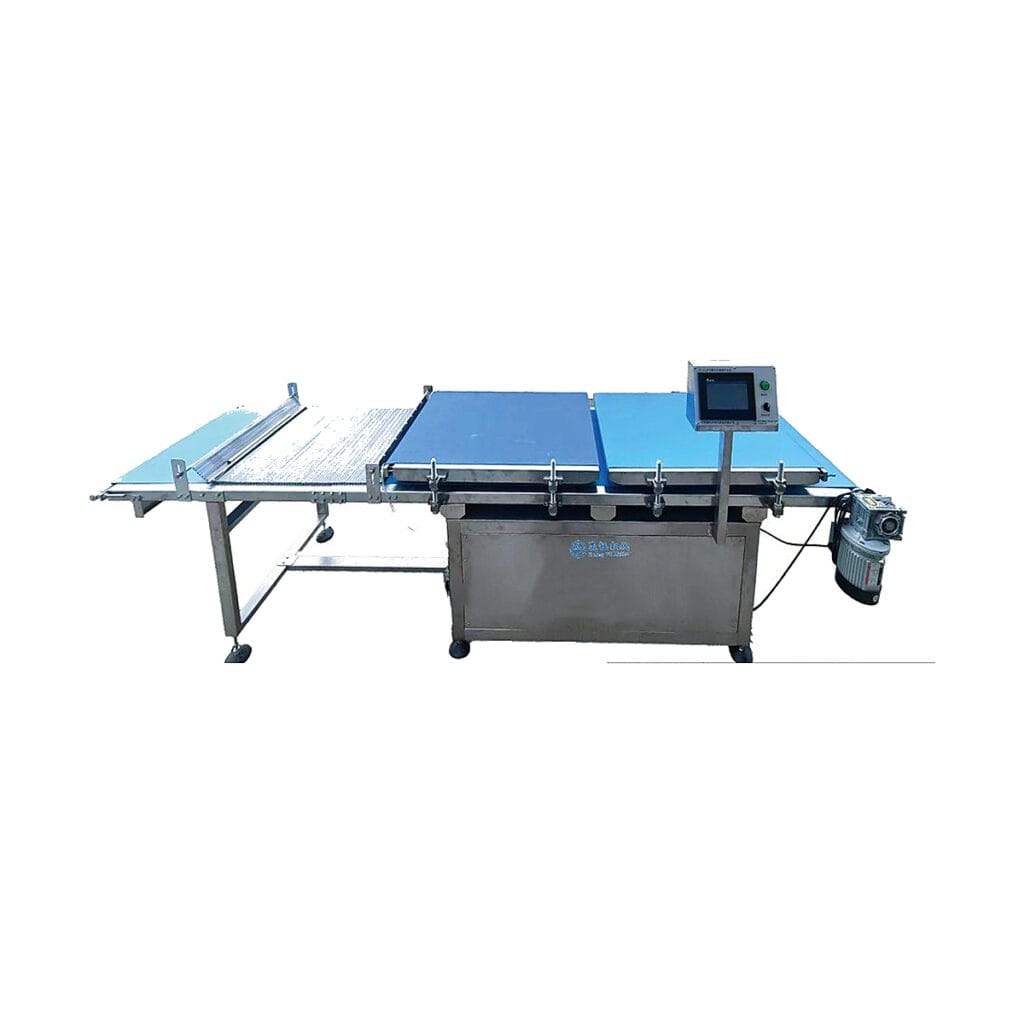
Laminated products present one of the clearest examples of why dough sheeting requires process control.
A laminated dough contains alternating layers of dough and fat created through repeated rolling and folding. During baking, these layers contribute to the characteristic flaky structure of products such as croissants and puff pastry.
The rolling stage needs to reduce thickness without unnecessarily damaging that layered structure.
Temperature is particularly important.
If the fat layer becomes too soft, it can smear into the surrounding dough rather than remaining distinct. If it becomes too firm, it may crack instead of extending with the dough.
Large reductions in thickness can also create excessive mechanical stress.
For this reason, laminated dough often benefits from gradual reduction through several roller settings rather than one large change.
The machine therefore needs to be considered together with dough temperature, resting time, layer structure, and the final product target.
Why Progressive Thickness Reduction Is Usually Better
Imagine a thick dough block entering a very narrow roller gap.
The machine may still be able to pull the dough through, but the sudden compression can create several problems. The surface may tear, the edges may become irregular, or the dough may stretch unevenly.
Progressive reduction gives the material more opportunity to adapt.
Instead of moving directly from the initial thickness to the finished thickness, operators can use several controlled stages:
Initial dough → preliminary flattening → intermediate reduction → final gauging → downstream processing
The ideal sequence depends on the dough.
A softer dough may tolerate a different reduction pattern from a highly elastic dough. Laminated dough may require additional attention because preserving internal structure is just as important as reaching the correct final dimension.
The appropriate process should therefore be established through actual production trials rather than selecting roller gaps only from theoretical dimensions.
How Dough Temperature Affects Sheeting
Temperature can significantly change the behavior of dough passing through a bakery dough sheeter.
Warm dough may become softer and more extensible. In some formulations, this can make it easier to stretch but also more likely to stick to rollers or conveyors.
Colder dough can become firmer and resist thickness reduction. Applying excessive pressure to compensate can create unnecessary mechanical stress.
The effect becomes especially important when production conditions change throughout the day.
A dough processed shortly after preparation may not behave exactly like dough that has rested longer. Likewise, production room temperature can influence dough condition during extended runs.
When sheeting results begin to change even though the machine settings have remained constant, operators should therefore check the dough condition before assuming that the equipment needs adjustment.
A useful operating procedure records both successful machine settings and the approximate dough conditions under which those settings were established.
What Causes Dough to Shrink After Sheeting?
A bakery dough sheeter can produce a sheet at the correct thickness, yet the dough may change dimensions after it leaves the rollers.
This often occurs because dough has elastic properties.
During sheeting, the rollers stretch and compress the material. Once that mechanical force is removed, the dough can partially recover toward its earlier dimensions.
The amount of recovery varies according to formulation, gluten development, mixing history, resting time, temperature, and the severity of the rolling process.
This becomes important when the dough is immediately cut.
If a production team measures the sheet only while it is under roller tension, the dimensions may change before it reaches the cutter.
Allowing suitable dough relaxation where the process requires it can help reduce uncontrolled recovery.
Rather than repeatedly changing the cutter dimensions to compensate, manufacturers should first understand whether shrinkage originates during sheeting.
How a Bakery Dough Sheeter Connects With Cutting
Sheeting and cutting should be treated as connected processes.
A cutter performs best when the incoming dough maintains suitable thickness, width, direction, and tension.
If the sheet moves sideways on the conveyor, cuts may no longer align correctly. If the sheet stretches during transfer, the final cut dimensions can change even though the cutting tool remains fixed.
An uneven sheet can create another problem: pieces may have identical length and width but different weights.
This makes transfer between sheeting and cutting particularly important.
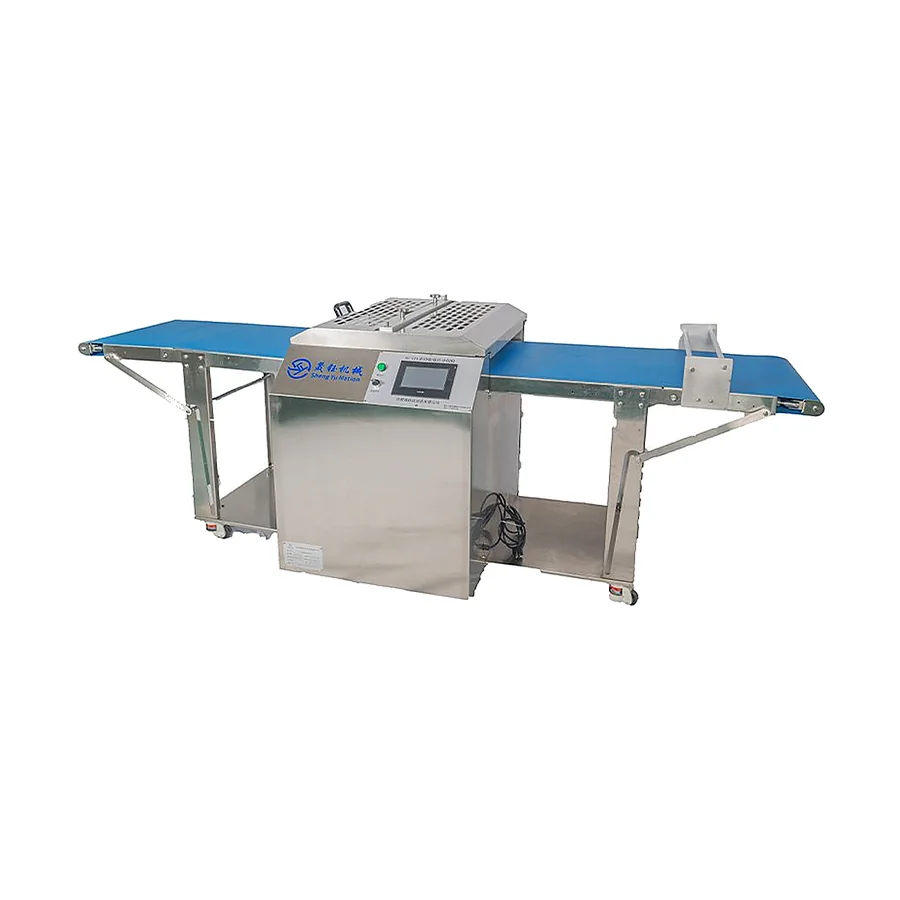
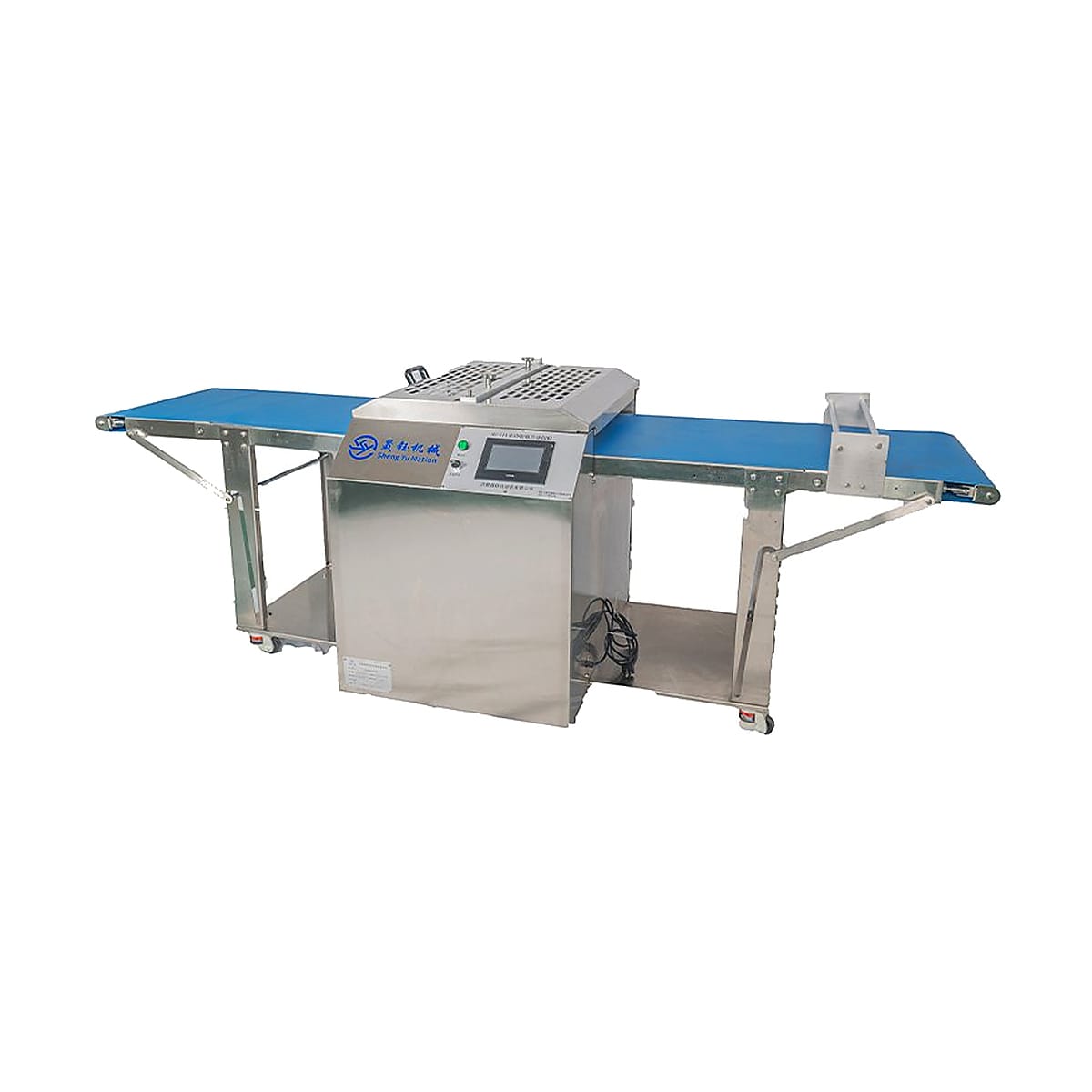
The relevant machines within ShengYu’s dough processing equipment range can be considered according to how dough needs to move through rolling, cutting, and forming stages rather than selecting each stage independently.
For an automated process, belt speeds should also be coordinated so the dough is not unnecessarily stretched or compressed between machines.
How Sheeting Supports Dough Forming
Many bakery products require more than a flat dough sheet.
After sheeting, dough may be curled, rolled, molded, pressed, folded, or formed into another shape.
The quality of the incoming sheet directly affects these operations.
If one side is thicker than the other, the dough may roll unevenly. If sheet width changes during production, forming tools may receive inconsistent material. If the dough has been stretched too aggressively, it may shrink during or after forming.
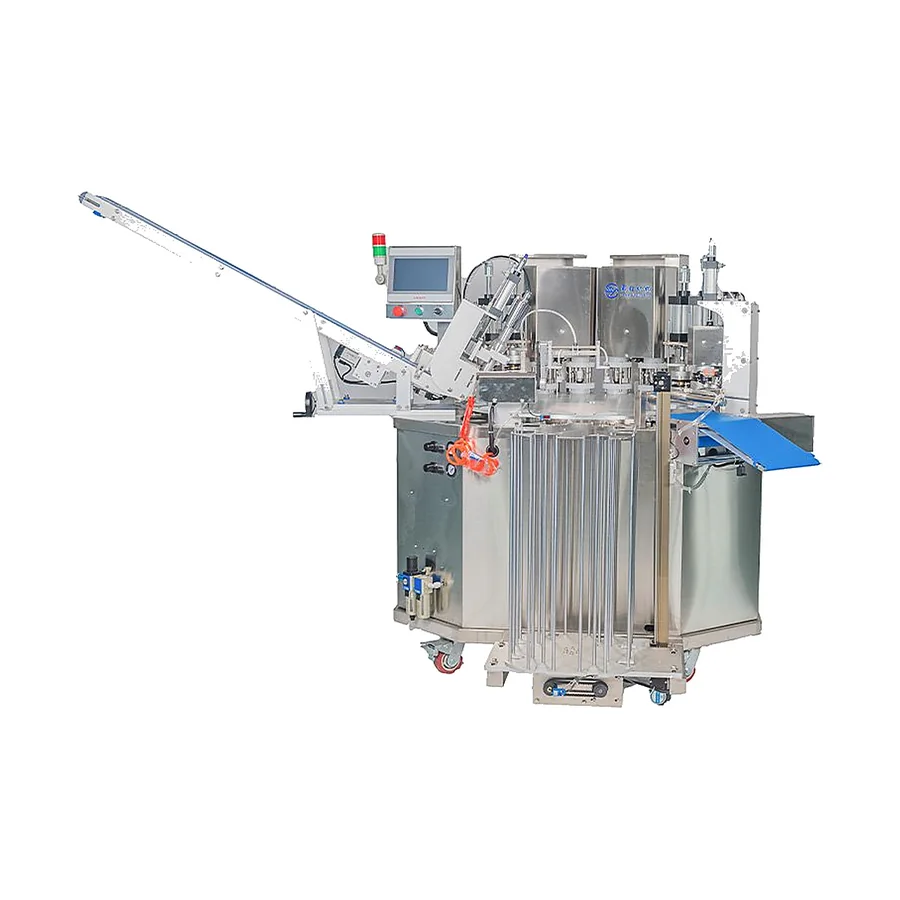
For processes in which rolling and forming are closely connected, ShengYu’s Dough Roll Forming Machine represents the kind of equipment relationship that needs to be considered when developing the complete dough-processing sequence.
The key question is not simply whether the dough has been sheeted.
Manufacturers should ask whether the sheet leaving the roller has exactly the characteristics needed for the next machine.
That includes thickness, width, surface condition, direction, elasticity, and transfer stability.
How Conveyor Speed Influences Dough Quality
Roller adjustment often receives most of the attention, but conveyor speed can also influence sheeting results.
The dough needs to move smoothly into and away from the roller section.
If the downstream conveyor pulls the dough substantially faster than it leaves the rollers, the sheet may be stretched. If it moves too slowly, material can accumulate or wrinkle.
This becomes more important with thin or soft dough because these products can deform easily after leaving the roller.
In integrated bakery equipment, the speed relationship between successive machines should therefore be evaluated rather than setting each conveyor independently.
Operators should watch the dough itself.
A stable sheet should move between processes without visible stretching, bunching, folding, or sideways movement. If these behaviors appear, changing the roller gap may not solve the actual problem.
Common Bakery Dough Sheeter Problems
A useful troubleshooting process begins by identifying where the defect first appears.
Uneven Thickness
This can result from irregular incoming dough, roller misalignment, unstable feeding, or inconsistent pressure across the working width.
Dough Sticking
Possible causes include high dough temperature, unsuitable dough condition, residue on contact surfaces, or excessive surface moisture.
Torn Edges
Edges may tear when the reduction between roller stages is too aggressive or when the dough lacks sufficient extensibility.
Dough Wrinkling
Wrinkling can occur when conveyor speeds are poorly coordinated or when the outgoing sheet is not transferred smoothly.
Excessive Shrinkage
High dough elasticity, insufficient resting, or aggressive rolling may contribute to sheet recovery after processing.
Irregular Width
Uneven feeding or asymmetrical dough entering the rollers can cause one part of the sheet to extend differently from another.
Instead of adjusting several settings simultaneously, operators should make one controlled change at a time and observe the result. This makes it easier to identify the actual source of the problem.
How to Set Up a More Repeatable Sheeting Process
A repeatable process starts before the dough reaches the machine.
Incoming dough should be prepared under reasonably consistent conditions. Large differences in temperature, dimensions, or resting time make it harder for fixed machine settings to produce identical results.
Operators should establish an initial roller setting based on previous production experience and then examine the actual dough leaving the machine.
Important observations include:
sheet thickness, surface condition, edge quality, width, shrinkage, sticking, and transfer behavior.
If additional reduction is required, the roller gap should be adjusted progressively.
Successful settings can then be documented for future production.
These records should not be treated as permanent values regardless of dough condition. Instead, they provide a practical starting point that operators can fine-tune according to actual production behavior.
What Should Bakeries Consider Before Choosing a Sheeting Process?
Equipment selection should begin with the bakery product rather than the machine.
First define the dough.
Is it laminated or non-laminated? Soft or firm? Highly elastic? Temperature sensitive? Sticky? Does it require repeated folding?
Next define the target output.
The production team should know the required final sheet thickness, width, downstream cutting dimensions, and product shape.
The following process is equally important.
A sheet that will immediately enter a cutter may require different transfer control from dough that needs to be folded or laminated again.
Production layout should also be considered. Operators need sufficient access for feeding, inspection, cleaning, setting adjustment, and maintenance.
Finally, bakeries should consider product changeovers. A process dedicated to one standardized pastry has different flexibility requirements from equipment that needs to handle several related products.
Why the Fastest Sheeting Speed Is Not Always the Best
When evaluating bakery production equipment, it is easy to focus on maximum throughput.
But faster roller or conveyor movement does not automatically create a more efficient production line.
If increasing sheeter speed causes greater thickness variation, unstable transfer, or accumulation before the next machine, the complete process may become less efficient.
Production speed should therefore be evaluated at line level.
If the cutter or forming machine can accept a certain amount of dough per minute, running the sheeter substantially faster creates little benefit unless there is a suitable buffer between the stages.
The best operating point is one where dough moves continuously and predictably from one machine to the next while staying within the required product specifications.
Stability is often more valuable than operating every machine at its theoretical maximum speed.
Maintaining a Bakery Dough Sheeter
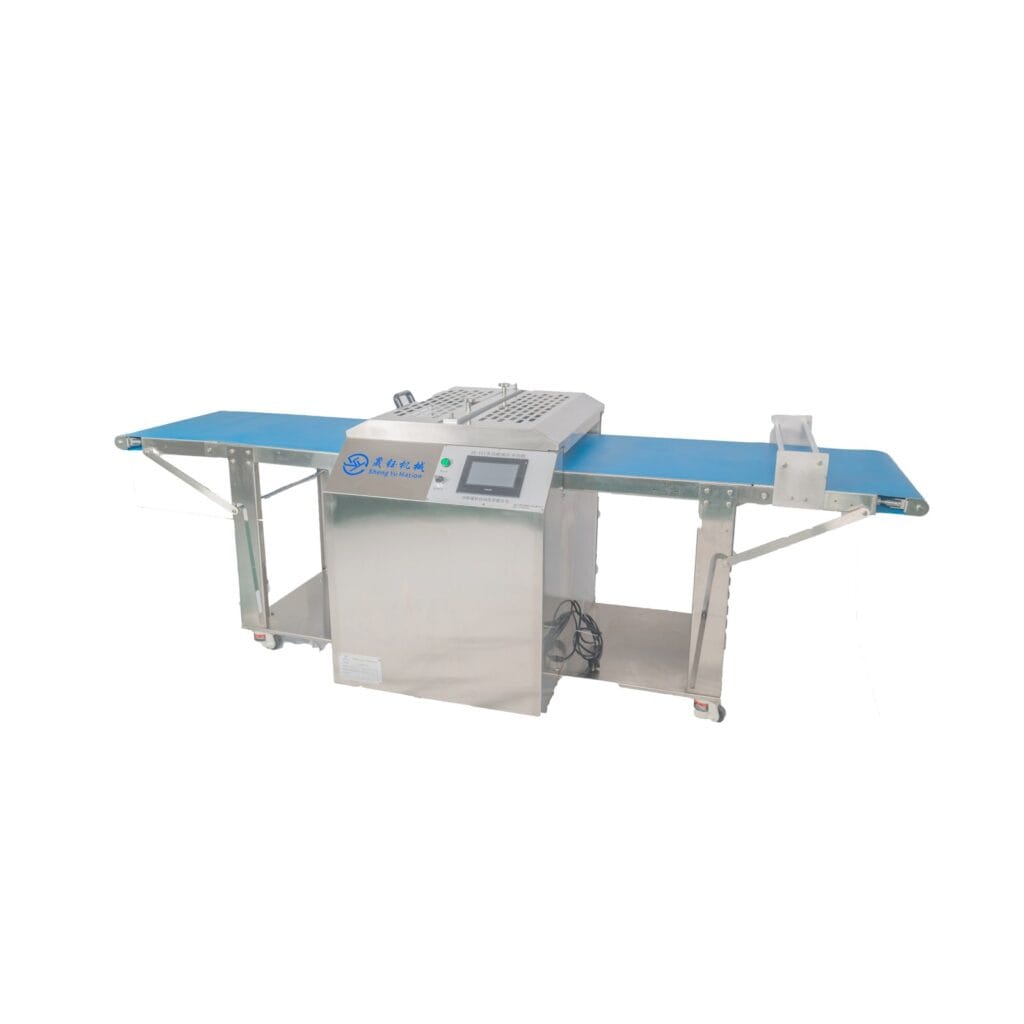
Routine maintenance supports thickness consistency and reliable material transfer.
Roller surfaces should remain clean and free from accumulated dough or other material that could affect contact with the sheet.
Roller alignment should be inspected if repeated thickness differences appear across the working width.
Conveyors should track correctly and move smoothly. Belt problems can change the way dough enters or leaves the sheeting section even when the rollers themselves are operating normally.
Adjustment mechanisms should also remain repeatable. If operators return to the same setting but begin receiving substantially different results, both the machine condition and dough condition should be examined.
Food-contact areas should be cleaned according to the equipment’s operating procedures and the bakery’s applicable sanitation requirements.
Preventive inspection is especially important when the sheeter is part of an integrated production line, because a problem at this early stage can interrupt several downstream machines.
Conclusion
A bakery dough sheeter is not simply a faster replacement for manual rolling. Its real production value lies in establishing a more controlled dough condition before cutting, forming, laminating, filling, or other downstream operations.
Reliable sheeting depends on the relationship between the dough and the machine. Temperature, elasticity, hydration, initial dimensions, roller gaps, reduction sequence, conveyor speed, and downstream requirements all influence the result.
This is why bakeries should evaluate sheet quality according to the complete production process rather than thickness alone.
When incoming dough conditions are controlled, thickness is reduced progressively, and the sheeting stage is properly matched with subsequent equipment, a bakery dough sheeter can provide a much more stable foundation for repeatable pastry and bakery production.
FAQ
What is a bakery dough sheeter used for?
A bakery dough sheeter reduces dough to a controlled thickness before later operations such as cutting, laminating, forming, folding, or filling. It is commonly used for pastry, tart, cookie, laminated dough, and certain bread-processing applications.
Why does dough tear when passing through a sheeter?
Tearing may occur when thickness is reduced too aggressively, the dough is too firm, elasticity is unsuitable, feeding is uneven, or the dough condition is not appropriate for the selected roller gap.
Why does dough become thicker again after sheeting?
Dough can partially recover after leaving the rollers because of its elasticity. Gluten development, resting time, temperature, formulation, and the amount of mechanical stretching can all influence this recovery.
Can a bakery dough sheeter handle different dough products?
Potentially, yes, but different doughs require different operating conditions. Roller gaps, reduction sequence, dough temperature, feeding method, and downstream processing may need adjustment for each product.
Can a dough sheeter connect directly with cutting or forming equipment?
Yes. Sheeting can be integrated with downstream equipment when sheet dimensions, conveyor speeds, transfer conditions, and processing capacity are properly coordinated.