
Table of Contents
Introduction
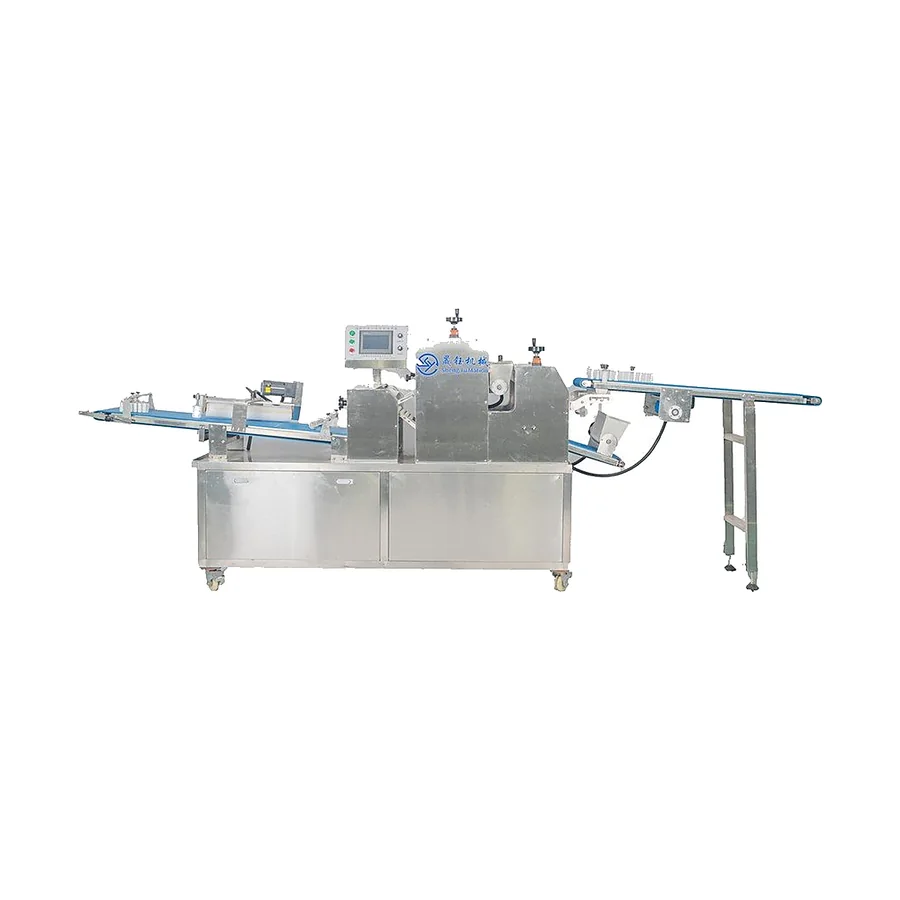
Consistent dough thickness is one of the foundations of reliable pastry and bakery production. When dough is rolled manually, differences in pressure, operator technique, temperature, and dough condition can create variations from one batch to another. These differences may affect forming, cutting, filling, baking behavior, and the appearance of the finished product.
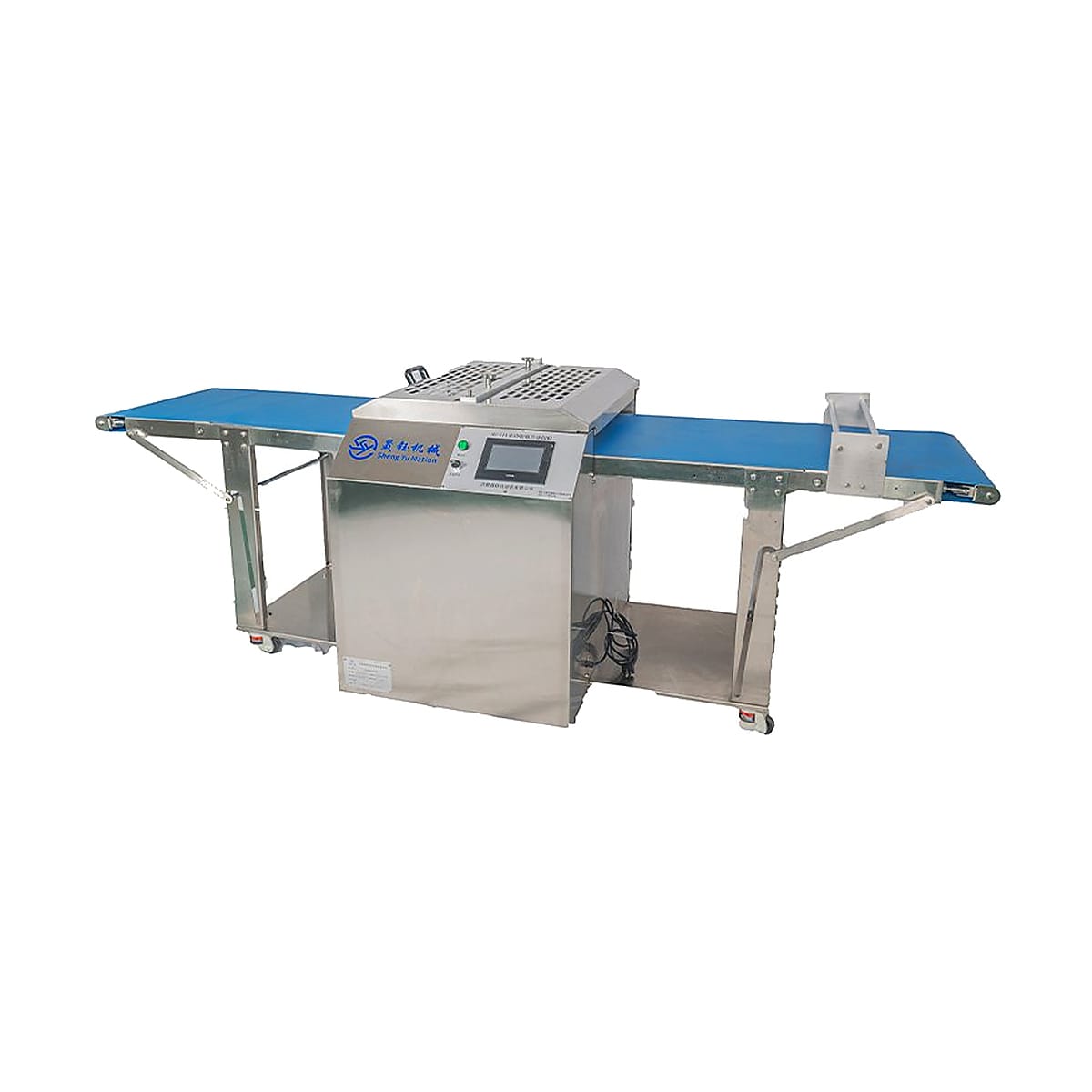
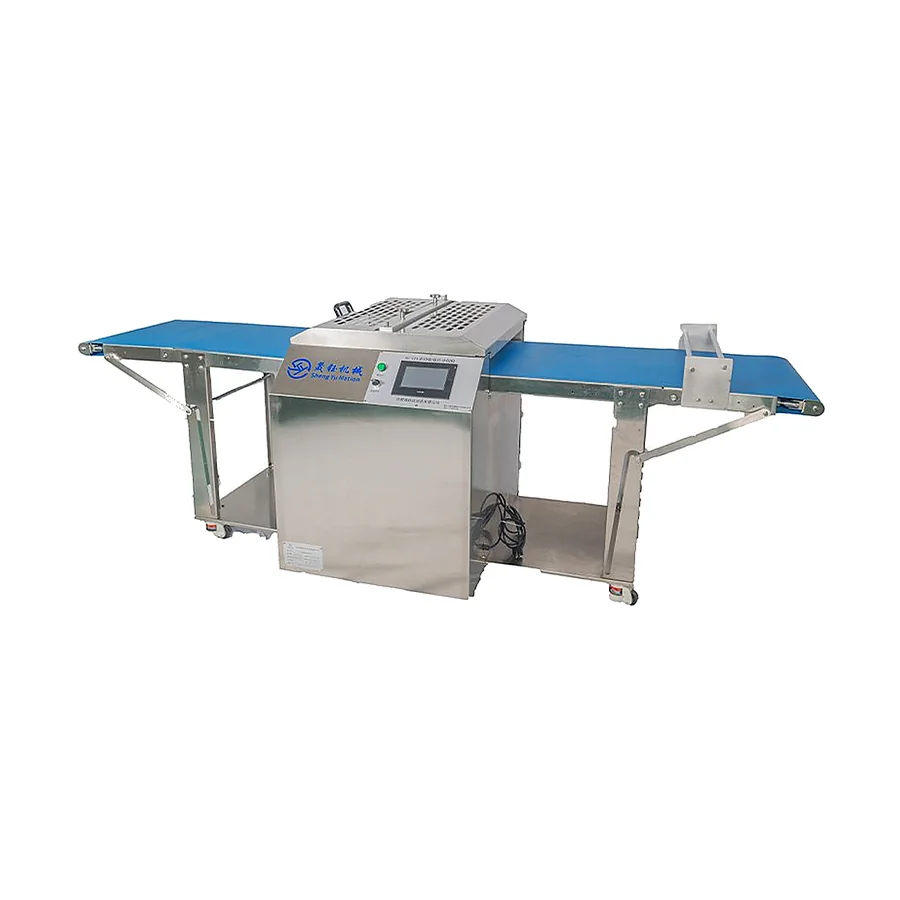
A dough sheeter is designed to make this stage more controlled. Instead of repeatedly rolling dough by hand, the machine passes dough through rollers that gradually reduce its thickness and create a more uniform sheet. This process is widely used for pastries, pie crusts, cookies, layered dough products, tart shells, and many other bakery applications.
For food producers moving from manual preparation toward more organized production, understanding how a dough sheeter works is important because sheeting often becomes the connection between dough preparation and later processes such as cutting, forming, filling, and tray arranging.
What Is a Dough Sheeter?
A dough sheeter is a machine that reduces a piece or block of dough into a continuous or controlled sheet of relatively uniform thickness. The basic principle is straightforward: dough enters a gap between rollers, pressure is applied, and the dough gradually becomes thinner as it moves through the machine.
The process is known as dough sheeting, and it is commonly used in bakery and pastry preparation where consistent thickness is important for subsequent production stages.
Unlike simple manual rolling, a dough sheeter can provide more repeatable pressure across the width of the dough. This helps operators create sheets that are easier to cut, fold, laminate, form, or feed into downstream equipment.
Different dough sheeters can vary considerably in configuration. Some are compact machines intended for individual production stations, while others are integrated into larger processing systems. The correct design depends on dough characteristics, target thickness, product dimensions, production flow, and the equipment positioned before and after the sheeting stage.
How Does a Dough Sheeter Work?
The basic operating sequence begins when prepared dough is placed or fed into the sheeting area. The dough then passes between rollers with a controlled gap. As the rollers rotate, they pull the dough forward while applying pressure across its surface.
Rather than attempting to reach the final thickness in one aggressive compression step, good sheeting practice normally reduces thickness progressively. Gradual reduction can help maintain a smoother dough structure and reduce unnecessary tearing or distortion.
The process can generally be understood through several stages.
First, the dough is prepared in a suitable size and condition for feeding. Excessively uneven dough blocks may enter the rollers irregularly, so preliminary shaping can improve stability.
Next, the first roller section compresses the dough and begins creating a flatter shape. Additional rolling or gauging stages can then reduce the dough further until the required thickness is reached.
Finally, the finished dough sheet leaves the sheeting section and moves toward its next operation. Depending on the production process, this may involve cutting, forming, folding, filling, stamping, rolling, or transfer to another machine.
In a larger production setup, the dough sheeter should therefore be considered part of a connected process rather than an isolated machine.
Why Uniform Dough Thickness Matters
Thickness control affects much more than appearance. A dough sheet that varies significantly across its surface can create problems during almost every later production step.
For example, when cutting fixed shapes from uneven dough, some pieces may contain noticeably more dough than others. During forming, thicker sections may require greater pressure while thinner areas can tear more easily. When baking, inconsistent thickness may also result in differences in heat transfer and texture.
Uniform sheeting improves predictability. Operators can establish a target thickness and maintain more stable dimensions before the dough reaches cutters, molds, or forming stations.
This becomes particularly important for products such as tart shells, pastry bases, layered dough, and formed bakery products where dough thickness directly influences final geometry.
The sheeting stage should therefore be evaluated together with the rest of the dough processing equipment used in the production flow. Matching each processing step helps reduce sudden changes in dough shape and improves continuity between machines.
What Types of Products Can Use a Dough Sheeter?
A dough sheeter can support many bakery and pastry processes, although the ideal configuration depends on the physical behavior of each dough.
Pastry dough is one of the most common applications. Products requiring thin and consistent sheets benefit from controlled rolling because the following cutting or forming stages depend strongly on dimensional accuracy.
Pie and tart production can also use sheeting to create dough at a controlled thickness before circular cutting, shell forming, or mold pressing. Maintaining consistent sheet thickness helps make individual shells more uniform.
Cookie production may use a dough sheeter when products are cut from sheets rather than deposited individually. A consistent dough layer helps produce pieces with similar dimensions and baking characteristics.
Certain bread and filled bakery products can also incorporate sheeting as part of their forming process. In these cases, dough may be flattened before rolling, filling, folding, or shaping.
Laminated products require even greater control because the dough is repeatedly rolled and folded. Here, sheeting affects not only dimensions but also the distribution of layers throughout the dough structure.
Dough Sheeter vs Dough Roller: What Is the Difference?
The terms dough sheeter and dough roller are sometimes used interchangeably, but they can describe slightly different production roles.
A dough roller usually refers broadly to equipment that uses rollers to flatten or reduce dough thickness. A dough sheeter places more emphasis on producing a controlled sheet that can continue into later bakery operations.
In practical bakery environments, the distinction often depends more on machine design and application than terminology.
| Comparison | Dough Sheeter | Dough Roller |
|---|---|---|
| Primary function | Produce uniform dough sheets | Flatten or roll dough |
| Thickness control | Usually a central function | Depends on machine design |
| Continuous processing | Common in larger systems | May be batch or continuous |
| Downstream connection | Often connected to cutting or forming | May operate independently |
| Typical applications | Pastry, tart shells, layered dough, cookies | General dough flattening and preparation |
For manufacturers designing a complete production process, the more important question is not what the machine is called, but whether its roller structure, feeding method, thickness adjustment, and output format match the intended product.
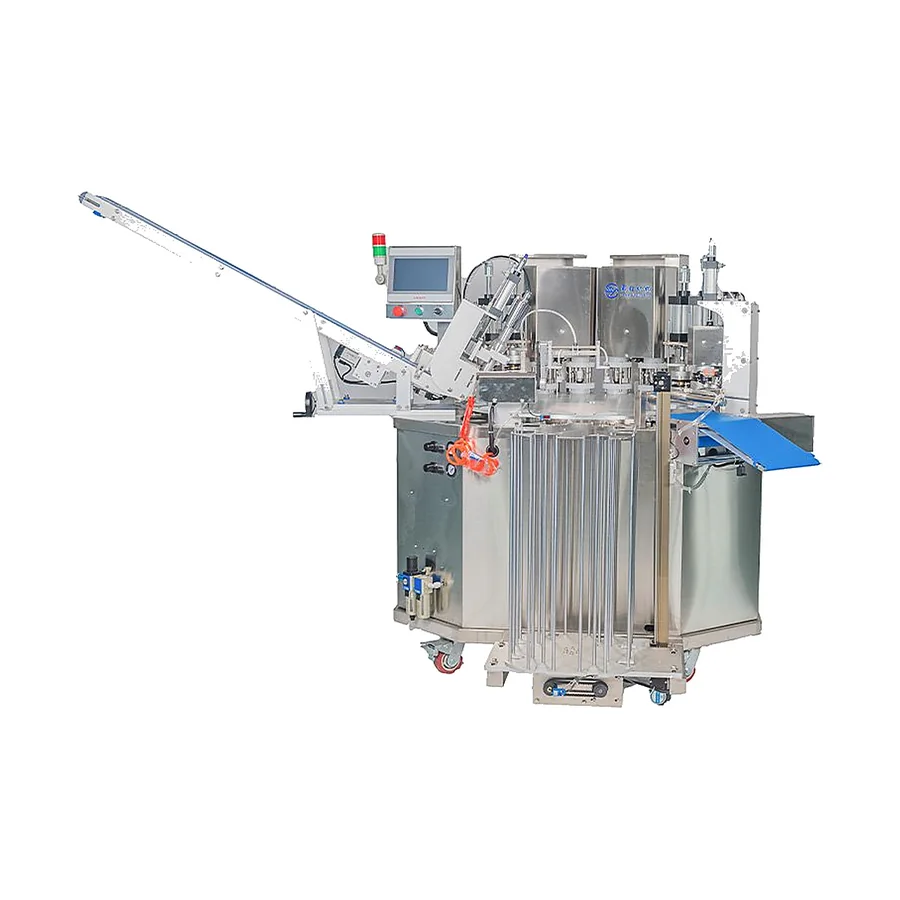
For example, a dough roll forming machine may be more appropriate when rolling and forming are closely connected within the same production stage.
Key Factors That Affect Dough Sheeting Quality
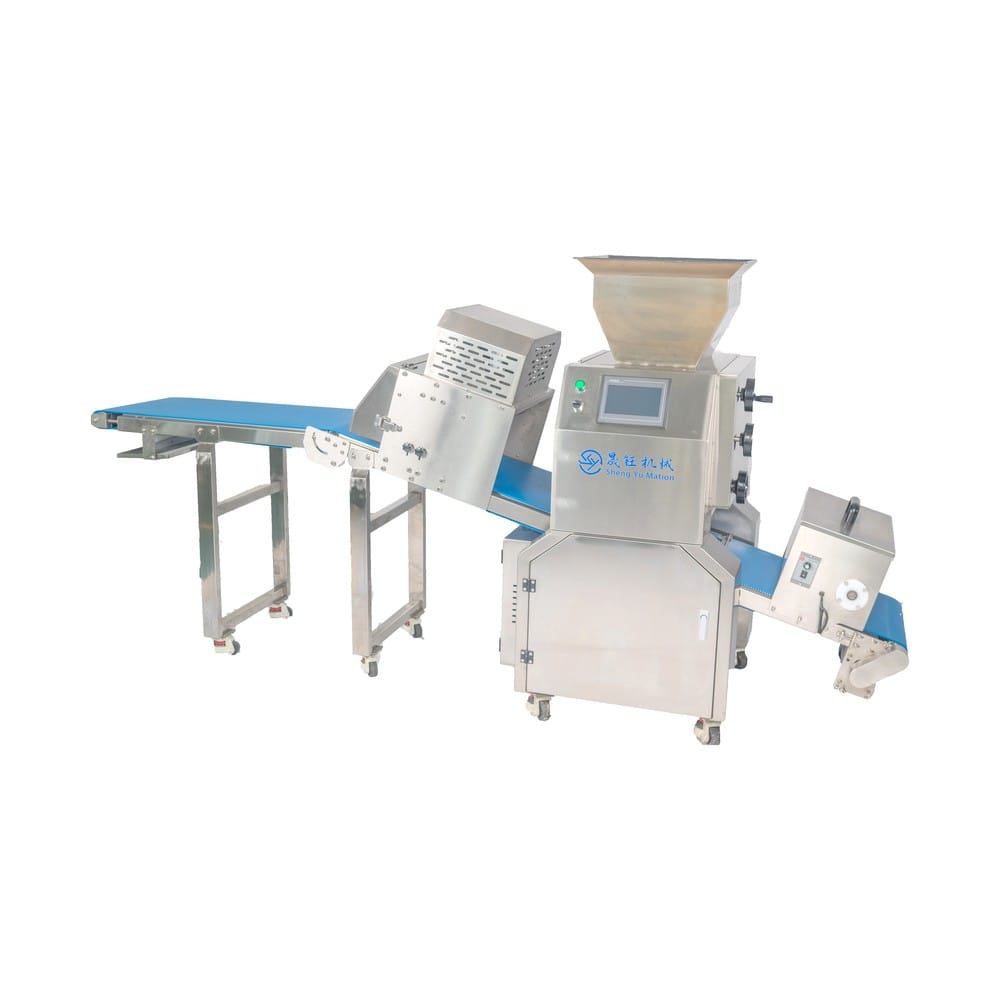
A dough sheeter cannot compensate for every variation in raw dough. Machine settings and dough preparation must work together.
Dough temperature is one important factor. Dough that becomes too soft may stretch excessively or stick to contact surfaces, while dough that is too firm may resist compression and require greater rolling force.
Moisture level also affects behavior. Dough with different hydration characteristics can respond differently to roller pressure, surface contact, and reduction ratios.
The initial dough thickness matters as well. Feeding a very thick dough piece directly into a narrow roller gap may create unnecessary stress. Progressive reduction usually provides more controlled results.
Roller alignment is another important consideration. The gap should remain consistent across the working width so that one side of the dough does not become thinner than the other.
Finally, production speed should match the characteristics of the dough. Faster movement does not automatically mean better performance. Stable feeding and predictable output are more important than simply increasing roller speed.
How a Dough Sheeter Fits Into an Automated Production Line
A dough sheeter often becomes most valuable when it is integrated with other processing equipment.
A typical production sequence may begin with dough preparation. The prepared dough then enters a dividing, pre-forming, or feeding stage before reaching the sheeter. After thickness reduction, the dough sheet can continue toward cutting or forming equipment.
For tart production, the sheet may be cut into portions before being pressed into molds. In pastry production, it may be folded, rolled, filled, or shaped. In cookie production, the sheet may move toward rotary or shaped cutting.
This creates a process such as:
Dough preparation → feeding → sheeting → thickness control → cutting → forming → filling → tray arranging.
The exact sequence changes according to the product, but the principle remains the same: every machine should deliver material in a form that the next machine can handle consistently.
Poor integration can create bottlenecks even when individual machines perform well. A sheeter producing dough faster than the following cutter can process it, for example, does not improve the performance of the complete line.
Production planning should therefore focus on balance between stages rather than evaluating each machine only by its individual output.
What Should You Consider When Setting Dough Thickness?
There is no single correct dough thickness for every bakery product. The appropriate setting depends on formulation, forming method, filling ratio, desired texture, and final product geometry.
Instead of selecting a thickness only from a finished product drawing, manufacturers should consider how the dough will change during subsequent processing.
If the dough will be stretched during forming, the sheet entering the forming stage may need to be thicker than the final dough wall. If it will be folded several times, the number of layers must also be considered.
For filled products, thickness must balance structural strength and eating characteristics. Dough that is too thin may break during handling, while dough that is unnecessarily thick can affect the relationship between shell and filling.
Production trials are therefore useful when establishing final machine settings. The objective is to create a repeatable operating range rather than relying on one theoretical number.
Common Problems During Dough Sheeting
Several production issues can occur when machine settings and dough condition are not properly matched.
One common problem is tearing. This can occur when the dough is reduced too quickly, when the roller gap is too narrow for the incoming dough, or when the dough lacks sufficient extensibility.
Uneven thickness can result from inconsistent feeding, roller alignment issues, or an irregular dough block entering the machine.
Sticking may occur when dough condition, surface properties, temperature, or flour management are not suitable for the process.
Dough can also shrink after leaving the rollers. Some elastic doughs naturally recover part of their original shape after pressure is released. Production settings should account for this behavior instead of assuming that the roller gap always equals the final stabilized dough thickness.
Another problem is distortion during transfer. Even a well-sheeted dough can lose its shape if it is stretched when moving between conveyors or machines.
Understanding these causes helps operators focus on the entire process instead of repeatedly changing one machine setting.
How to Maintain Consistent Dough Sheeter Performance
Routine inspection is important because sheeting accuracy depends on mechanical consistency.
Food-contact areas should be cleaned according to the machine manufacturer’s operating and sanitation procedures. Dough residue should not be allowed to accumulate around rollers, belts, guides, or transfer areas.
Roller surfaces should be checked for damage or material buildup. Conveyor tracking should also be monitored where belts are used.
Adjustment mechanisms need to operate smoothly so that thickness settings can be changed predictably. If settings gradually become difficult to reproduce, mechanical inspection may be required.
Operators should also record useful production settings for repeat products. Dough condition can still vary, but documenting roller gaps, process sequences, and other operating parameters gives the production team a reliable starting point.
Preventive maintenance is particularly valuable in integrated lines because an unexpected problem at the sheeting stage can interrupt every downstream operation.
How Automation Changes the Dough Sheeting Process
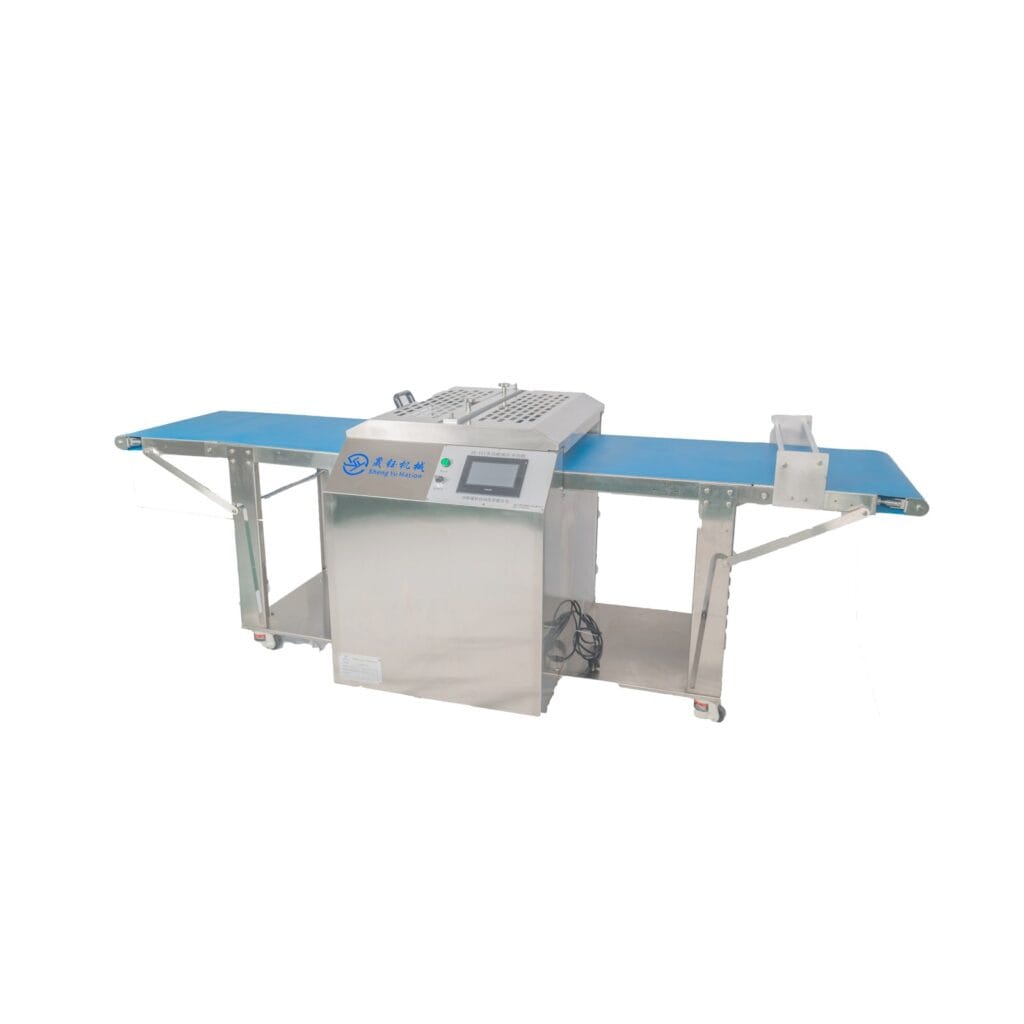
Manual dough rolling depends heavily on operator skill. Experienced workers can achieve excellent results, but maintaining the same result over long production periods becomes increasingly difficult as volume grows.
A dough sheeter introduces mechanical control into this stage. Roller gaps, feeding direction, and processing sequence can be standardized more easily than manual rolling pressure.
In more integrated systems, automated feeding and downstream transfer can reduce repeated manual handling between production stages.
Automation does not eliminate the need to understand dough behavior. Instead, it makes process knowledge easier to reproduce. Once a suitable operating range has been established, the same production method can be followed more consistently across batches.
This is especially useful when a bakery produces standardized products that must maintain similar dimensions from one production cycle to another.
Conclusion
A dough sheeter is more than a machine for making dough thinner. Its main value lies in creating a controlled and repeatable dough sheet that prepares the material for later cutting, forming, filling, rolling, or baking processes.
The quality of sheeting depends on several factors working together, including dough condition, roller adjustment, reduction method, feeding stability, and downstream equipment integration. For this reason, selecting or configuring a dough sheeter should always begin with the finished product and the complete production process.
When sheeting is properly matched with the surrounding equipment, it can help create more uniform dough dimensions, reduce variation between batches, and establish a more stable foundation for automated pastry and bakery production.
FAQ
What does a dough sheeter do?
A dough sheeter passes dough through rollers to reduce its thickness and create a more uniform sheet. The sheet can then continue to processes such as cutting, forming, folding, filling, or laminating.
What products can be made with a dough sheeter?
Dough sheeters can be used for pastries, tart shells, pie crusts, cookies, laminated dough products, and some bread products. The appropriate machine configuration depends on the dough and final product.
Why is dough thickness important?
Consistent thickness helps improve dimensional control during cutting and forming. It can also reduce variation in final product shape and baking behavior.
Can a dough sheeter be connected to other bakery machines?
Yes. In automated production, sheeting equipment can form part of a larger process that includes feeding, cutting, forming, filling, and tray arranging equipment.
What causes dough to tear during sheeting?
Tearing may result from excessive thickness reduction, unsuitable dough condition, incorrect roller settings, or feeding the dough too aggressively. Gradual reduction and stable dough preparation can help improve the process.
Discuss Your Dough Processing Requirements
If you are planning a pastry or bakery production process, provide ShengYu Automation with information such as your product type, dough condition, target dimensions, required production flow, and downstream forming or filling process. This information helps determine how sheeting, cutting, forming, and auxiliary equipment should be arranged into a practical production solution.